Posts

Révolution Française: Emmanuel Macron and the Quest to Reinvent a Nation – Sophie Pedder

14-7-18

Dear Partners in thought,

When I was attending the Chamonix Get Together, a micro-Davos, in September 2016 and talking to his former boss at Rothschild & Cie about his chances in the forthcoming Presidential elections, the old and wise banker told me that he had none as he had no money. Foregone conclusion. Next topic please. Nine months later Emmanuel Macron had redefined the French political landscape, destroying left and right, crushing an inept Marine Le Pen (after a TV debate to remember, beating Nixon-JFK hands down) and becoming the youngest French President of the Fifth French Republic. EM, the man who defied all odds, became one of the leaders of both Europe and the free world at a time when his victory put a major stop to populism globally and countered that of another unlikely earlier winner across the pond.

I would like to recommend you a great book written by Sophie Pedder, the Paris Bureau Chief of the Economist: “Révolution Française: Emmanuel Macron and the Quest to Reinvent a Nation”. SP’s book is interesting at two levels: i) it is not written by an actor but an observer of French politics, also and that is key, non-French and ii) the quality of The Economist and its relative objectivity makes for a more dispassionate view of EM and France today. She takes us on a journey to understand EM, the man, from his childhood, his rise through the traditional steps of French meritocracy, his trek to the heights of French power and unusual voyage for his likes into investment banking before coming back to work for President Hollande under different roles, culminating into Bercy, the French ministry of the economy and finance. We go through his unusually dashing and at times cocky personality among French technocrats and his ambitious quest to make a difference, leading to his throwing his hat into the biggest Gallic ring, with no army and no money but an unparalleled drive and self-confidence. It is an amazing trip into En Marche, his movement of “marchers” (walkers and not of the sleeping kind) and his unseen so far ability to mobilise a sleepy civil society to change an old country whose history made it a pioneer among leading nations though riddled with self-doubts, a post- WWII legacy of state interventionism and a feeling of decline started in 1940, which de Gaulle and others fought hard and unsuccessfully to fully erase. This book is very good and insightful also as it is, as the FT put it recently, “sympathetic but not starry-eyed”. If I may, I will then take care of the latter while remaining fair.

EM won the French Presidency against all odds and partly as the center right candidate of Les Republicans, François Fillon, so far a remarkable politician, mismanaged the political backlash of jobs for his wife and family when a member of parliament more than a decade before. Fillon lost what was his to win. In seizing the Elysée, EM reshaped the French political landscape by destroying or weakening the traditional parties. The Socialist Party, one of the two leading parties of the Fifth Republic, becoming only a shadow of itself, reflecting the dilemmas faced by European social democracy. Les Republicans, which is the grandchild or great- grandchild of the Gaullist (UDR), then Chirac (RPR) parties is struggling to find a line between a modernist Macron and his En Marche movement (even if the latter is not a party) and the Front National (now renamed Rassemblement National or National Rally) not feeling enough air or space to evolve, while the National Rally of Marine Le Pen seems to struggle to exist and is also revisiting the merits of political dynasties. The only opposition, mainly in vocal and rally terms, is only the Insoumis of fiery tribune Mélanchon who have no policy impact. Meanwhile many tenors of former parties on the center right and left like Bruno Le Maire (finance minister), Edouard Philippe (ex-Le Havre Mayor now PM) or Jean-Yves Le Drian (ex-Socialist leader of Bretagne and former defence minister under President Hollande, now running Europe and Foreign Affairs at Le Quai d’Orsay) have joined EM and his centrist, yet mildly right leaning agenda that fits the times of liberal democracy.

One should remember that the Hollande Presidency (2012-2017), that was largely a reaction to the abrupt personal style of the Sarkozy one (2007-2012), was defined as a time of confusion with decisions taken too late and being too weak. One year after EM’s election, there is a certain feeling of confusions within the ranks of the government with contradictory statements, delayed policy events and quasi-public feuds, all that can also be explained by the fact that many in the leadership are new to governing. The matter is centred on whether EM’s policy of reforms, that the electorate supports, should not be “rebalanced” through a “rééquilibrage” – the official EM answer being no – and whether EM is not distancing himself from the French, reforming for their well being but being impervious with a certain coldness, distance, even contempt. Some of EM’s advisers tell him to keep the eye on the ball, forgetting about perception, others tell him to change attitude and being closer to the French lest the reforms may derail through a lack of support.

EM is very bright and was “running” faster than anyone in France since age 16. He may suffer at times from the perception of an excess of “brio”. He also enjoys moving the lines and this not too subtly through what some see as provocation, the latter done on purpose. Enjoying authority (though not yet authoritarian), cynical, ungracious are words often mentioned and could easily slip into excessive arrogance, remoteness and scorn. Some observers actually believe that EM will succeed but that the French will not reward him, in a Giscard scenario 40 years before. The French like their leaders to be the best but dislike the first in the classroom (les “premiers de la classe”), reflecting many of the conflicted views French society has always had about power, money and politics. Many of the the French find EM a bit arrogant though they also wanted a leader to restore some dignity to the Presidency after a less than august Hollande and Sarkozy presidencies . They guillotined their king in 1793 but always wanted to get one back, loved Napoleon I and much later the Gaullist democratic Cesarism. Yet they are never happy, wanting one thing and its opposite, wanting their camembert and eating it too.

EM is not the son of Valery Giscard d’Estaing, the reformist President (1974-1981) looking for the ever elusive political center (as I wrote to the FT Editor who kindly published me before the first presidential round last year) nor he is the son of Michel Rocard, the once extreme left winger who turned out to be a social democratic reformist in the eighties, even if the young and aspiring leader worked for him. He is the son of none and sees himself as “Gaullo-Mitterrandien”, taking on the mantle of both de Gaulle and Mitterrand, the two most consequential French leaders of the Fifth French Republic since 1958. He is a King-President following to a great extent the first Napoleonic model, albeit in a democratic way and minus the wars of conquest. The French elected a block of granite, impervious to demagoguery and in many ways the opposite of the modern populist leader à la Trump. He does not speak to please his core electoral base, just to inform it about his policies. He can be too frank at times like in French Guyana when he told the locals he was not Santa Claus as the Guyanais were not children. There is little doubt that EM has a high opinion of himself though this may be a natural reflection of the view he holds of the French presidency.

Can EM reform France if he loses the trust of the French? Can he reform France if he does stay the two five year terms? Most political analysts tend to think that voters judge policies through people (not as much in the U.S. these days but it is another matter and it is indeed early days). If the French do not think EM understand them or have enough empathy for them, they may start believing his policies are indeed unfair. This feeling is compounded by EM’s “grand bourgeois” origins for most and his Fifth Paris Arrondissement Lycée Henri IV location where he did his pre-graduate “preparatory courses” and is indeed considered an elite Paris area (as an side mine was the nearby Sixth with College Stanislas, which leaders of the CAC 40 know rather well, so I relate to the feeling). We go back to the perennial questions, quite topical, these of populism, of the elite and meritocracy which are core topics these days and not only in France. Voters want to be led by the best and the brightest but somehow also resend the best, feeling they are looked down upon by those they chose to lead, unwittingly or not. In addition, this young (only 40) leader and his dashing, leaner JFK, good looks may irritate as when you reform France, it may be better to look like a monk.

EM’s first mark was probably in the international arena where he established himself as a leader and a promoter of the “France is back” slogan (the latter, incidentally, felt vividly by the French expatriate communities globally). However his foreign policy impact was not expressed in nationalistic terms (“America first”-like) but rather as a contributor to the renewal of the European Union via the strengthening of the French-German axis at a time when Angela Merkel was struggling domestically following the aftermath of her open door migrant policy of 1995. In addition to working on his EU renewal plans, EM scored initial wins in inviting President Trump to the July 14 Bastille Day military parade (prompting copycat ideas back in DC; one wonders if EM had invited DT to do something special on the Eiffel Tower…) and in inviting President Putin to Versailles, home of the French kings, thus conveying the respect that the Russian President-Tsar finds key for his country and is a motor of his policies. EM stated clearly that France was back and was ready to talk “to all parties”, thus cementing the main foreign policy stance of his presidency. Clearly subsequent developments, such as trying to use his good relationship with DT, to soften the trade war stances of the American President, did not always create positive results, even if EM seemed relentlessly trying to change the course of events. While America is retreating from its role of leader of the Western world, weakening that very world in the process, EM is focused on ensuring the EU can transcend its differences (largely borne out of the migration issues) and develop a new stage of its history. In doing so, EM is focused on the EU core (noyau dur) without naming it given its elitist (yet again) flavour and driving the relationship with a politically more unstable Germany at a time of increasingly more complex EU (Italy and across Central & Eastern Europe.) EM believes in blocs, using the EU as a way for France to “exist” but also to ensure the EU strengthen itself as there is no alternatives in a world increasingly led by other blocs, most of whom developing strong and with increasingly nationalistic agendas, be they first or retaliatory strikers. In short, EM is not a politician – he does want to reinvent a nation, that plays a leading role in a multipolar world, if I may partly borrow from SP.

Recent polls show that EM retains an 85% support among its electorate and secured 50% of losing rival François Fillon’s centre right electorate making him a strong political player in today’s France where his opposition is either fragmented or non-existent on the traditional left and right sides of the spectrum. His base is thus very solid and has grown in strength if it can be argued that EM’s centre looks shifting on its right given his economic programme and the perceived relative lack of focus on assisting the French in need, the latter which may be a by-product of his will to change France and make people more responsible individually for their destinies. The key goal for his base is that he reforms the SNCF (the French state railways), a traditional bastion of the most radical unions and the French Communist Party since WWII. Concerns, as seen in polls, are in the slower capability to explain his reforms, so focused he is on their implementation and a certain focus on the “well offs” as part of its “free and protect” master policy plan. To date, only a very tiny minority of his supporters are disappointed while the opposition, left and right, is still searching for a message. The last polls show 50% of satisfied, 33% feeling it is too early to say and only 17% disappointed. By all standards, a year after a major election, this result shows Macron to be right (no pun intended).

A question and some observations: We can have and need great leaders. Do we ever have great peoples?

Democracy needs strong leaders and weakness is not a desired attribute. Democracy needs to be strong, supported by the building blocks of Western liberal values and empowered by strong leaders.

Can we combine everything we want in our leaders? What features matter? Results or personality and style? (even core Trump supporters forget about a certain lack of dignity, personally and in the role, as long as they feel there are resuts, even if they may be short term and, some would argue, illusory). For my part, I believe that personality and style matter as true leadership is whole.

Warmest regards from the American Athens of the 18th century, Boston, the home of the bean and the cod Where the Lowells speak only to the Cabots And the Cabots speak only to God! (Many thanks, dearest Alec, mentor, fellow of the Charles river and symbol of why I believe in another America – for you and all of us).

Warmest Regards,

Serge


Serge Desprat- July, 2018 (Prague)
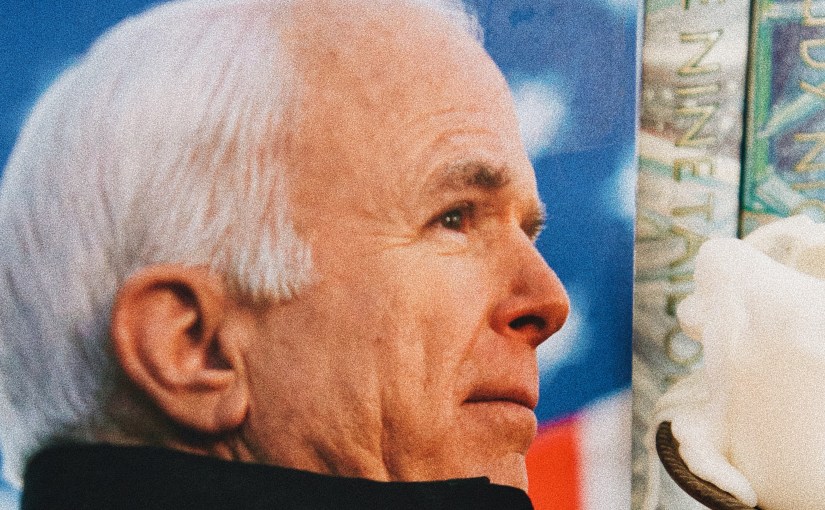
The Restless Wave – John McCain

11-7-18

Dear Partners in thought,

“A true American hero” is how John McCain is most described, increasingly so and this for many reasons. It may look excessive if not Hollywood-like, except that it’s not. America has always been a country of exception – indeed the indispensable country – often with individuals of exception at its helm, not all running it but always contributing to its destiny. John McCain is one of them and “The Restless Wave” his testimony, a book that stresses his longlasting drive I recommend reading for those who like great stories and believe in a world ran by our traditional Western liberal, not to say American, values. McCain is emblematic of a disappearing specie in our times which is that of the moderate Republican, a value- based internationalist, free trader, strong on defense and pro-capitalist individual (incidentally my political home, assuming I were to hold a U.S. passport).

The son and grandson of two Admirals (his grandfather was on the deck of the USS Missouri when Japan surrendered), McCain was nevertheless not predestined to greatness (in his very own words), having followed his recent forebears’s footsteps to Annapolis, where he graduated at the bottom of his class. We know that the Vietnam war and his extremely tough prisoner experience changed everything, later leading to a career in the U.S. Senate as first, junior, then senior, moderate, Republican Senator for the State of Arizona. This book, while reminiscing about the key aspects of his whole career and persona is really more focused on the period following his defeat against Barack Obama in the 2008 Presidential elections. McCain could have been President if not for the wind of history bringing in the first African American President and a dubious choice of running mate, which he still supports, though being aware of its weaknesses. The book is well structured and its chapters focus on key topics and people having marked America and McCain very directly over the last ten years, which I will cover broadly. After reading this book, if there was an adjective to describe McCain across the aisles, it would be “honorable” and that would be a major understatement.

In No Surrender and Country First, MacCain discusses the 2008 campaign and the men and women involved in it, among whom, also his brief primary rival, the lawyer- turned actor-turned U.S. Senator Fred Thompson (a tall, massive, easily recognisable Law & Order character, always projecting the requisite gravitas that would get him later to the U.S. Senate). While he campaigned for two years, McCain, while running, also fulfilled his duties as a U.S. Senator, his main focus at the time being supporting the Iraq surge which was unpopular and risking costing him dearly in the Republican primary where Mitt Romney, the ex-Bain Capital founder, former Governor of Massachusetts and future 2012 nominee, was his main rival then. We see him with his friend Senator Lindsay Graham of Florida (often a duo that would rise against DT’s policies years later) in Iraq. There is a notable ceremony of naturalisation of Hispanic immigrants, often illegal, who were fighting within the U.S. forces in Iraq. We see a couple of boots representing two dead soldiers that had made the ultimate sacrifice with General David Petraeus, the Roman legion strategist and fighter, first in class at West Point and the figurehead of the surge, saying: “They died serving a country that was not yet theirs”. McCain wishing “that every American who out of ignorance or worse curses immigrants as criminals or a drain on the country’s resources or on our “culture” could have been there”, wanting “them to know that immigrants many of them having entered the country illegally, are making sacrifices for Americans that many Americans would not make for them”. Going back to the race and the primary he finally secures, McCain goes into his strategy of running a McCain-Libermann ticket, with Joe Lieberman, an independent, formerly Democratic Senator, before going for Sarah Palin, whom he will select as running mate, going in great details to explain the rationale for it. McCain knows early on Obama’s strong competitive advantages based on his age, image of change at so many levels and comparative party positioning though he bets on his experience and foreign policy acumen. The polls are close but the Lehman Brothers collapse changes everything, putting Obama in the lead and making the McCain team not expecting miracles. In addition he has to fight some of his more extreme supporters’ racial slurs against Obama and defend responses that are not strong enough from him and his team, assuming they were obvious to start with. His team feels outspent, out-advertised and out-organised, expecting to lose which they do on election day. There is a feeling that, while he does not like to lose (who does?) he was stoically ready for it.

About Us is about the formal breach of American ideals in the fight against terrorism in the aftermath of 9-11. While having declared on 9-12 that “We are coming. God may have mercy on you, but we won’t”, McCain discusses the extreme measures taken since late 2001 to respond to the losses of 3,000 lives at The World Trade Center in NY, including the Enhanced Interrogation Techniques (EIT) or torture in an other name and the dilemma counter-terrorists and the military face in defending the U.S. from further attacks. McCain feels strongly it is wrong politically, intellectually and morally to torture terrorists and not applying the Geneva Convention to these enemy combatants, while branches of the U.S. government feel it can apply EIT to seized terrorists as they are not signatories to any convention. McCain believes that in doing so the application of EIT openly damages the interests, reputation and interests of the U.S. globally. We go through various cases of EIT application, including the famous one in relation to the Abu Ghraib Confinement Center. McCain calls on all Americans to live America’s ideals to remember that “we are always Americans, and different, stronger and better than those individual who wish to destroy us”. Once again, “the moral values and integrity of our nation, and the long, difficult, fraught history to uphold them at home and abroad, are the test of every American generation”. This chapter is the first of a few to focus on values, that define McCain. It is also a very hard issue to deal with, remembering 9-11 and its trauma (We all have very personal ways and memories to relate to 9-11 and the end of an era; I worked briefly on the 93rd floor of the South Tower in 1987). It is definitely a problem of conscience though I can also hear the voices in the trenches of the Len and women who protect us, doing what we don’t and don’t want to know, stressing that the end justifies the means and that in front of the most abject terror, war can only be total.

In the Company of Heroes deals with McCain’s natural, close, involvement with the U.S. troops on the ground in both Afghanistan and Iraq (he will have gone more to Afghanistan) and his admiration for the military leadership and tactical brilliance of Generals Petraeus and Odierno as well as the new ways to fight insurgency led by “Team of Teams”‘ General McChrystal, the latter who was removed from command by President Obama following the ill-famous Rolling Stones interview on how the U.S. could win the war in Afghanistan, outside the traditional chain of command. It is palpable that McCain relates vividly to these soldiers away from home, fighting for their country as he did in another life. Arab Spring unsurprisingly covers the seismic regional power shifts initially triggered by the self-immolation of Tunisian fruit trader Mohamed Bouazizi that was followed by home-made leadership and regime changes in Tunisia, Egypt and Yemen, the dreadful civil war in Syria and the internationally-led elimination of Muammar Qaddafi and his regime in Lybia. McCain goes in detail about each key zone of change and spends time on the attack of the Benghazi mission resulting in the death of Special Envoy Christopher Steven, whom he knew and admired for his “all in” trademark attitude, that would have long repercussions including in the campaign of the 2016 presidential elections. McCain also covers in detail the Syrian conflict and its many vivid ramifications in terms of migrations and political and human consequences within the EU. In Fighting the Good Fight (with and against Ted Kennedy), McCain focuses on immigration, legal and illegal, and narrates his many bill efforts and working most of the time with the senior Senator of Massachusetts to craft bipartisanship solutions until his death from brain cancer in 2009. It is also about the old bipartisanship, of the kind I mentioned in “The Hellfire Club” among veterans, even if Ted (another “great” I was fortunate to meet in 1982 in Boston) was not. Then comes Russia and Putin, the latter’s McCain’s primary foe in Nyet (know thine enemy) where he goes through the change in relationship with the Kremlin since the advent of President Putin and a gradually more nationalistic foreign policy in the mid-eighties, focusing on Georgia and the slow descent to war as well as the Magnitsky Act and its related sanctions following the death in jail of Russia-based asset manager Hermitage’s Bill Browder’s lawyer. As a sequel, McCain covers in Know Thyself (defending the West) the invasion of Crimea and the Ukraine conflict in Kiev and in the east, the killing of Russian opposition leader Boris Nemtsov, as well as the attempts to destabilise Montenegro following its desire to join NATO and the EU. As MacCain concludes: “China is the challenge of the century but Putin is the clear and present danger…”. In deference to my Russian friends and while Russia has had a very unilateral, nationalistic, foreign policy, at times using the widest range of tools at its disposal to compensate for its relative strength status, one should never forget the Russian trauma associated with the loss of empire, the way it may not have been treated afterwards and the utter need for respect as a key international player. While being aware of McCain’s rationale, there may indeed be merits in engaging with Russia so as to gradually make it change its approach and perceptions in order to work with her in the concert of nations. In this respect, events like the World Cup, an organisational and sporting success for Russia may be one the early steps toward normalisation, even if the hybrid war may perdure for a while as my expert friend Dmitri Trenin recently wrote for the famed Carnegie Moscow Center.

In Part of the Main (American Exceptionalism) is a key chapter. McCain quotes Saint Exupery, the famed author of The Little Prince, expressing during WWII when flying with U.S. forces, the inextricable link between American interests and the global progress of American ideals. McCain believes that the U.S. has a special responsibility to champion human rights “in all places, for all people, at all times”. Because “it is who we are” (incidentally, I used that one often lately). He is not shy of proclaiming: “I am a democratic internationalist, a proud one and I have been all my life”. He goes on to focus on Burma and his involvement in making changes happen in that country ruled by the military.

Always respecting Obama as a man and a President, he briefly mentions his foreign policy record. He defended the Libyan intervention but was appalled at too early a withdrawal on the ground of avoiding another Iraq quagmire, coining the “leading from behind” approach. He was angered by the refusal to provide Kiev with weapons to protect its sovereignty. He was sad when the Obama administration did not uphold the red line after the use of chemical weapons in Syria, naming it the biggest mistake of his presidency, hurting American interests and values. While he never doubted Obama’s sincerity, he regretted that Obama did not make the hard calls when needed, confounding allies, encouraging enemies and having many good people stranded, starting an American leadership withdrawal in fact if not in name. However McCain never doubted that Obama shared the 75 year old bipartisan consensus that American leadership of the free world was a moral obligation and a practical necessity.

While discussing American exceptionalism, McCain starts clearly distancing himself from DT (even if he would vote for some of his legislative proposals like the tax cuts but not others like the repeal of Obamacare). McCain clearly stresses how appalled he is about DT’s style in communication and overall tactics and his disdain for American values, the global progress of democracy and the rule of law abroad. He finds disturbing DT’s “lack of empathy for refugees, innocent, persecuted, desperate men, women and children” and finds abhorrent his mention of welfare or terrorism being for him their only reasons to come to America. He cannot condone DT’s absence of interest in the moral compass of world leaders and their regimes. He lambasts DT’s attacks on free media and his use of “fake news to discredit unflattering news stories. He cannot stand DT’s showing with praise the world’s worst tyrants. His criticism goes far beyond DT, when he attacks former State Secretary Rex Tillerson who warned State Department employees not to condition relations with nations “too heavily” on their adoption of values “we’ve come to after a long history of our own” (to his credit, RT’s VMI Commencement address last May, heavily reported, shows his regrets and clear adherence to traditional American values). There is no doubt that McCain is appalled at the treatment by DT of allies, be it in relation to NATO, trade or the G7, regardless of the necessary changes that the U.S. may wish in striking more balenced relationships. There is a long, emotional address to the U.S. Senate that MacCain gave on the occasion of the health care debate that transcends it, focused on the role of the Senate itself, going to the core of American history and values, which is particularly moving in our challenging times. This speech also underpins the need for enhanced civility and cooperation in politics and society, two features which have been seriously damaged lately, also given the example provided by those who should lead by example at the top.

McCain is fighting brain cancer, knowing the odds, but keeping hope that he will be around for a bit longer to contribute a few more times. (If I may say, even if mine was non-cancerous, I relate more than others to the unfairness of the affliction and the powerlessness attached to it, feeling his approach all the more admirable). He looks forward and is simply grateful. Grateful for 50 years of service to his country and having lived so long – he is 81 -, contributing so much. I am sure this American hero knows that tough times, also for countries, don’t last, and that tough countries do. In one sign of control over his own destiny, he sent the clear message to DT that he should not attend his funeral. After you have read his book, you will feel that McCain, whom you would have liked to have known more earlier, whilst being an American hero, is also like founding father Thomas Paine, a citizen of the world.

Merci, Monsieur McCain.

Warmest regards,

Serge

PS: If I may I would like to provide you with a tailored excerpt of the powerful words of his prologue. Written only a few years ago, they would have seemed mundane, if not quaint. Written in 2018, they sound reminiscent of a distant golden era while pushing us to go back to it.

(America is) “the most wondrous land on earth, indeed. What a privilege it is to serve this big, boisterous, brawling, intemperate, striving, daring, beautiful, bountiful, brave, magnificent country. With all our flaws, all our mistakes, with all the frailties of human nature as much on display as our virtues, with all the rancor and anger of our politics, we are blessed. We are living in the land of the free, the land where anything is possible, the land of the immigrant’s dream, the land with the storied past forgotten in the rush to the imagined future, the land that repairs and reinvents itself, the land where a person can escape the consequences of a self-centred youth and know the satisfaction of sacrificing for an ideal, where you can go from aimless rebellion to a noble cause and from the bottom of your class to your party’s nomination for President.

We are blessed, and in turn, we have been a blessing to humanity. The world order we have built from the ashes of world war, and that we defend to this day, has liberated more people from tyranny and poverty than ever before in history. This wondrous land shared its treasures and ideals and shed its blood to help make another, better, world…We have sought to make the world more stable and secure, not just for our own society…To fear the world we have organised and led for three- quarters of a century, to abandon the ideals we have advanced around the globe, to refuse the obligations of international leadership for the sake of some half-baked, spurious nationalism cooked up by people who would rather find scapegoats than solve problems is unpatriotic. American nationalism isn’t the same as in other countries. It isn’t nativist or imperial or xenophobic, or it shouldn’t be. Those attachments belong with other tired dogma that Americans consigned to the ash heap of history.

We live in a land made from ideals, not blood and soil. We are custodians of these ideals at home, and their champions abroad. We have done great good in the world because we believed our ideals are the natural aspirations of all mankind, and that the principles, rules and alliances of the international order that we superintended would improve the prosperity and security of all who joined with us. That leadership has had its costs, but we have become incomparably powerful and wealthy as well. We have a moral obligation to continue in our just cause, and we would bring more than shame on ourselves if we let other powers assume our leadership role, powers that reject our values and resent our influence. We will not thrive in a world where our leadership and ideals are absent. We wouldn’t deserve to.

All is said.


Serge Desprat – 11 July, 2018 (Boston)


Trump and Macron – A quick comparative review

7-7-18

Dear Partners in thought,

Having amply covered DT, directly and indirectly, and just focused on EM, I thought it was fun to see what brings them together and obviously separates them in terms of form, substance and approach both as man and State leader. Having a foot in both countries (and a third one in Central Europe, so still distant if only geographically) I thought I could try doing this quick review for your benefits. 

DT and EM look more alike than one would think even if they do not stand for the same values and world ideals.

On where they are today
They are both “improbables”. Both won presidential elections nobody thought they could. They initially had no party nor electoral base (even if DT had more time to build it given the longer primary process).

On their impact on the political landscape
They both transformed their own political landscape, EM by totally redefining it, DT in changing the ethos of the Republican Party that became the Trump Party.

On their social origins  
Both share a privileged background in their countries, EM the son of an upper middle class family, DT the son of a successful real estate developer. If anything DT is more the son of his father than EM is, while the latter is definitely a product of the French meritocratic system, enhanced by privileged childhood.   

On their personality 
They greatly differ. DT’s personal life, involving three marriages, is riddled with extra-marital affairs and a loutish behaviour. EM was married once to his former teacher, 22 years his junior, not known for any affairs and well known for a total respect of women, the latter that drove his drive for gender parity in government and parliament. EM and DT could not be more different in terms of persona.  

On their style
They greatly differ. DT speaks mostly about anything for its core base, to cement support and reassure, with little primary regard for actual facts. EM does not communicate much and could explain his policies more, which has been an issue lately though, when he does, focuses on policies that are aimed at reform rather than his political base. 

On their view of the world
They greatly differ. DT is a Palmerstonian where one has no permanent friends and only permanent interests, thus projecting a nationalistic policy that no living American can remember. EM is a defender of the Western world and values, believing in Truman’s NSC 68-based order where alliances do matter to ensure a stable world.  

What if we dreamed a bit? 
Give his profile and values, EM would be a great American President, which would benefit the U.S. and the world would love.  


Warmest regards,

Serge


Serge Desprat- July 7th, 2018 (Prague)

The Hellfire Club – Jake Tapper

3-7-18

Dear Partners in thought,

As we are now well into the summer, I decided to turn yet again to the world of novels which has always provided us with a way to escape, a feeling that is very welcome.

I wanted to tell you about “The Hellfire Club” by Jake Tapper, the very Jake from CNN’s State of the Union. This novel has nothing to do with today’s politics (directly at least, but indirectly who knows?) so friends of Fox News and the like can enjoy a break without the fear of so-called liberal and radical fake news. The action takes place in the DC of the 1950s where America and its leadership were rebuilding the world and where the “swamp” we hear about was getting perfected. Whist a novel all the protagonists and general background are real and the research very thorough. As an aside, Jake could easily be a main character with his Gary Cooper’s 1950s good, clean, looks (No, I am not gay).

We are in 1954 and Joe McCarthy, working with Bob Kennedy (indeed, how do we forget), is at his fifth year of eradicating the red threat from all walks of American life, having no qualms of breaking careers and doing away with otherwise good people. We run into Joe Alsop as well as Richard and Patricia Nixon, him the current VP and of course Ike, the D Day mastermind, who has been in the White House for two years. We have a chat with LBJ then Senate minority leader and running Texas for the Democrats, in a time, long ago, when they did. The hero is Charlie Everett Marder, a Columbia academic, specialist of the Founding Fathers, turned Republican congressman when asked to take up a seat after his predecessor died in mysterious circumstances (we know something is afoot early on). Like many of his peers he is a war veteran who saw the horrors of the former world conflict, him in France. He is married to Margaret, a very independent lady, zoologist by trade, whom he met in college and was not just studying “for her Mrs. degree” to borrow from a well-know line of the times. He is an idealist do-gooder and wishes to change things for the better, but learning fast he has to compromise to survive and still matters in his new career in DC.

Bipartisanship is a reality in American politics then, mainly through weekly poker games among veterans that form a class transcending parties and where policies are promoted or killed in a late night, smoke-filled, atmosphere of camaraderie forged on the battlefields of Asia or Europe. As an observer says: “It’s both reassuring and disconcerting to see them all friendly-like” but the bond is there nearly ten years after the war as they share humble memories, knowing that their main achievement was to survive. They all drink like fish (“Political life seems to require new levels of drinking”) as if alcohol was a fully accepted cement of policy- making. We witness the first black congressmen – again two veteran Tuskegee airmen – at a time when the civil rights movement is not yet at full speed. Clubs rule the day, some more known that others like the Alfalfa or the Gridiron, some far more obscure, not to say secret like the Hellfire Club that has its roots in 17th century England and an infamous history of debauchery by its then aristocratic members. Fights take place when companies that manufactured military goods during the last war wish to get funding from the Appropriations Committee in an effort led by its prominent Chairman and a fight ensues, led by Estes Kefauver, a leading Democratic Senator (who – trivia time – won the New Hampshire primary in 1952 before being sidelined). Investigations are launched into the pernicious effect of comic books on the American youth. We learn that a boy thought he was a super hero and could fly). It is reminiscent of today’s articles and the young’s (and no so young’s) addiction to their iPhone. In a famous line, we learn that via a book pushed by the crusaders that “Batman and Robin were like a wish dream of two homosexuals living together. Superman was a fascist, Wonder Woman a lesbian dominatrix”. Good people do prevail as in all good novels that wish to et us to read more.

It is America at its best (with funny quirks) and at times worst – even then – running the world, setting up the Western Alliance, telling us why it makes sense. And I bought it. And still believe in it.

As it is a novel I shall stop here and not return like MacArthur. Enjoy this great book.

Warmest regards,

Serge

Serge Desprat- July 2018 (Paris)


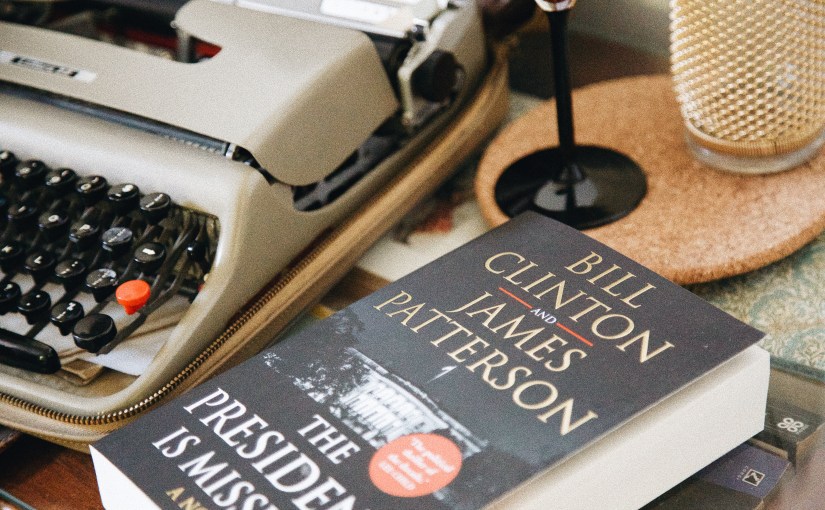
The President is Missing – James Patterson & Bill Clinton

15-6-18

Dear Partners in thought,

I was hesitant to comment on “The President is Missing” from James Patterson and Bill Clinton as I did not want to stray from my core initiative, not to say mission. However I thought that when a former American President and a leading thriller writer band together, there might be a message or two to be found, especially in our troubled times. The book is clearly a novel but the subject matter, the co-authorship and even the title led me to do a review of sorts, especially at the start of the summer in Prague when a dose of lightness (of being and this time very bearable) is always nice, whatever the prevailing times.

JP and Bill are both displayed as fully-fledged authors on the same cover type font (and unsurprisingly not this time with JP before his “co-author”). I will admit that, yes, I have liked JP’s books ever since “Jack and Jill”, especially those written in the late nineties-early noughts. And even if Anne-Sophie (my very educated and wise wife) takes JP’s books as not real literature as three page chapters in big print don’t pass the test, I always liked JP’s knack for good stories, including his choice of characters, like the famed Alex Cross, even if I tend to agree that he has found a peculiar way to bring the old industrial revolution to penmanship through the use of an ever larger team of writing partners, potentially dampening something on the way. What decided me was the title – “The President is Missing” – that could be taken literally (and indeed one should, while I will respect the plot’s fine prints for better beach times) – but that could also be a tongue in cheek one, probably never admitted (or admissible, though that sounds so much Mueller investigation-like) as it could be argued that the actual President is indeed missing, this in more ways than one. Or maybe is he too much around these days and we would like him to be missing? (but always in good health, in sunny Florida, that is, so there is no unfortunate confusion).

Bill seems to have had a good time working with JP, if we except the book tour when “Monicagate” was brought back unexpectedly to the fore in a TV interview (and JP was on-his-feet swift in his defence or that of the book focus which showed, regardless of any view on the 20 year old matter, some nice and true grit). As an aside, it is an interesting point that we call Bill Clinton Bill while we never call George W Bush (whom we miss too, especially now) George, though I digress. Bill brought in the experience, the kind of which you only get by walking the corridors of the West Wing and projecting that unique track record of having run the greatest show on earth. The book is definitely on top of JP’s writing quality, mixing a great plot with a level of authenticity that can only come from an insider like Bill. Chapters are no longer three pages and while the type font is the same, wording density and quality is way above the usual JP fare. The book at 500+ pages is also much longer than the usual JP productions. It would be interesting to know whether Bill actually did some of the writing though probably not, focusing on contents veracity (in chapter 4, there is an episode mentioning the political demise as a congresswoman of his chief of staff that will make readers knowingly smile at the likely self-deprecating wink).

The President is Jonathan Lincoln Duncan (note Dun-can rings like Clin-ton and the reference to Lincoln, Professor Gaddis’s hedgehog-fox supremo), a former Governor of North Carolina (and not Arkansas) and speaks in the first person, making us feel somehow that he will make it to page 513. The atmosphere feels real which is the least to expect but is especially well rendered in the painting of each scene and the delivery of the characters. There is an effort to depict those senior civil servants with humanity so we know where they come from, how they got there and what makes them tick. The President is very human, a recent widower with a relapsing illness fighting impeachment in his first term. Run of the mill stuff. There is a Martin Sheen’s President Bartlett’s “West Wing” feel to JLD up to the depiction of his personal assistant. We go from crisis to crisis to ceremonial events that shows us the daily life of Presidents with uprisings in Central America, followed by assassination attempts in the Gulf and memorials to fallen soldiers, going back to the Sit Room to oversee a drone strike against a terrorist cell in Yemen and finally night walks without Secret Service detail running into fellow Irak 1 war vets and ex-members of the Big Red One. (note that Hillary was quite supportive of the book as stated in the “thanks” and that JLD met also his wife at law school – UNC at Chapel Hill not Yale – though similarly in the library).

The President is taking the lead to thwart a massive viral cyber attack after his daughter, a grad student at La Sorbonne (excellent choice), is approached with information about the mother of all terrorist plots against the U.S. and a plan to meet her father in DC to tell more. A Turkish cyberterrorist boy wonder looks to be behind the threat though is saved by the President when a Ukrainian hit team targets him in Algeria for elimination, making us and a select congressional committee wonder. An attractive professional Serbian lady sniper in an early stage of pregnancy (very differentiated foe indeed) and her merc team get involved. Ensues a number of intense developments like a shooting at a baseball stadium, car chases along the Capitol area and more shooting, without us and the President still knowing what the threat really is. Then there is a Benedict Arnold in our midst, one of six tested senior officials in the know of the threat, who might have arranged the earlier hits, in cahoots with the terrorists. A foreign power is behind all this, which the ever friendly Mossad tells JLD could be Russia, which does not raise eyebrows. I will not spoil the story anymore, knowing you want me to stop.

The story is well crafted, if only a little bit convoluted. In any case the plot, which is very enjoyable, does not really matter. What does are the messages conveyed by JP & Bill as they are the reason why they banded together so they could stress a few key themes along the way and make them more easily absorbed in the novel format by the widest possible audience.

The main message is raising the awareness of the risk of cyberthreats to our way of life and the need for state of the art cybersecurity (I have to disclose my wife and I are lead investors in a great UK cybersecurity start-up before I go any further (*)). The book provides a crash course on what cyberthreats, phishing and other cyber warfare weapons, tactics and targets are and the nation states and their patriotic proxies that have used that new war tool (some far more than others offensively as is well known – my intent is not to conduct a seminar on cyber warfare – but basically all the leading powers). It is clear that recent years and all the hackings that took place during the last U.S. presidential campaign, posing a risk to the very democratic process, that have been attributed directly and indirectly to Russia, have led JP and Bill to stress the point, all the more as it was close to home for the latter. Richard C. Clarke, the cyber warfare Czar under four Presidents was consulted for insider accuracy (read his 2010 Cyber War, which is non-fiction but reads like a novel). The timing of the book ahead of critical November mid-term elections at a challenging time for America is no coincidence. Cyber warfare is a major and exponential threat to our societies as we rely increasingly on technology and thus make ourselves, our key infrastructures and our very democratic process unwittingly weaker and asymmetrical targets in the process.

The book has also other messages which are peppered along with quite a few depictions of emblematic scenes of daily American life (e.g. on one of his “nights out” in the Capitol area, JLD witnesses an African American teenager being forcibly arrested by two police officers and has a very balanced thought he shares with us) and sayings that warn of newer risks and stress these old Western liberal values:

  • “What happened to factual down-the-middle reporting?”
  • “We can’t survive without a free press.”
  • “We’re using modern technology to revert to primitive kinds of human relations. The media knows what sells – conflict and divisions. It’s all quick and easy. All too often anger works better than answers; resentment better than reason; emotion trumps (hm, hm – me here) evidence.”

There is a beautiful address to the joint session of Congress from JLD that encapsulates what America is and its values as we grew up to know them, that could have been given by Bill or by Ronald Reagan for that matter as it transcends partisanship and is the best summary of why Bill and JP became a band of brothers on this one occasion.

Going back to Western values, one of the common mistakes voters make when tempted by the sirens of populism is to forget the things that actually work in their lives. It is a case of taking things for granted and gradually forgetting about them, if only to regret them when the consequences of their action or inaction leads to the disappearance of key things and rights that seemed inalienable. What is key in a book like JP’s & Bill’s is also as much its messages as its sheer existence and the fact that we came to a point in our Western world when we can freely read a novel very close to the topic and actors of national leadership without suffering censorship. We actually do not think about it but that right was made possible because others fought for it, hence our duty to defend the values upon which that right was built. Nothing lasts forever if not protected and challenging times, like ours, should show that these rights and values are indeed eminently fragile.

One of the memorable quotes in the book, on its last page, comes from Ben Franklin when asked after the Constitutional Convention what kind of government the founders had given to the nascent America. His reply: “A republic, if you can keep it”.

Warmest regards,

Serge

(*): Just for fun, information and to inject some personal angle on the core topic of the novel: http://www.cyberessentialsdirect.com

Serge Desprat- 15th June, 2018 (Boston)

In Defense of a Liberal Education – Fareed Zakaria

14-6-18

Dear Partners in thought,

I would like to tell you about a wonderful book published in 2015 as it directly and indirectly deals with many key subjects we regularly cover, which is the famed “In Defense of a Liberal Education” by Fareed Zakaria. This book and his author are actually emblematic of major issues facing us today such as immigration, globalisation, meritocracy and what – and implicitly where – we (well, mostly but not only, our kids) should study in an age focused on securing jobs and lives constantly redefined by the tech revolution.

Fareed Zakaria was born and raised in Mumbai in a Muslim family (a fact not so well-known – he is secular and non-practising), educated at the Cathedral and John Connon School in Mumbai. Then he came to America in 1982, having been accepted at Yale (his older brother, Arshad, had gone to Harvard a few years earlier – they never played the Game). He was a President of the Yale Political Union and a member of Scroll & Keys society (He was actually quite politically conservative there while considering himself a centrist today). He went on to do a PhD in Government at Harvard (political sciences in the local lingo) studying under Samuel Huntington (well-known for “The Clash of Civilisations” in 1993) and Stanley Hoffman, the latter a great Vienna-born immigrant and European Affairs guru I mentioned in my brief 1982 dealings with. Interestingly Fareed eventually would help set up the Yale-NUS program (National University of Singapore) creating a strong Asian presence for Yale and mixing the best of both worlds (*). At age 28, he became the Managing Editor of Foreign Affairs, the Bible of the Council of Foreign Relations, which as you know, has been the NY-based establishment beacon of American foreign policy-makers for decades. Today, while being known for his CNN work (see below), he also has a weekly column in the Washington Post (Go see “The Post” with Streep and Hanks by the way) and has contributed to Newsweek, The Times and the Atlantic Monthly. Fareed is indeed a most accomplished chap and a very professional one too, also oozing balance and modesty. He is the embodiment of the American dream and why immigration, a pillar of American success, is key to the continued growth of the indispensable country.

Fareed is the “trailblazer” representative of the rising Asian-American class, many of whom, still very often not-American born, have excelled at integration and literally invaded Ivy League world and the likes (I was at the Yale Commencement Ceremony last May and had a feeling New Haven, CT was a suburbs of Singapore). Typically only 10-11% of college classes of Harvard, Yale and Princeton are comprising foreigners but the proportion of Asian-Americans far exceeds that number today, based obviously on merit that cannot be ignored by admission committees in spite of quota rumours and pressures often heard. In all fairness these Asian-Americans are culturally far more American than Asian, as I have noticed with my very interesting and enriching encounters and friendships – one in particular. What is key is their successful blending of the hard work ethics, often dismissed discipline and, to some extent, scientific approach provided by their Asian roots with the entrepreneurial freedom, conventional wisdom challenging and”sky is the limit” ethos traditionally breathed by their country of adoption. They simply have brains, work hard, are focused, want to succeed and benefit from the greatest learning environment. They also show immigration can be very successful for the host country as they will go on to expand the American (apple) pie. One could be forgiven to say that they are the very kind that Make America Great Again (with or or without the red cap). This is an interesting feature for us to realize during those times of immigration tragedies and debates even if the comparison could be simplistic as illegal immigrants may not all possess the same qualities or aspirations as they cross the border simply to escape strife, persecution and/or desire a better life. And they are illegal, which these Asian-American Ivy Leaguers are not, even if a tiny few may have been initially.

Another feature linked to topics often debated is Fareed’s first really widely recognised opus in 2003 which was “The Future of Freedom: Illiberal Democracy at Home and Abroad”. In this book he was the precursor, 12 years before the rise of Western populism, of the dangers that democracy itself (“democracy is the worst of all systems except for all the others” to quote Winston Churchill) could have hidden in its midst and was indeed hidden so far, especially in America, as voting participation was so low and considered the game of the “educated” or knowledgeable ones. In its aftermath came “The Post American World” published in 2008 which was also an extension of the message of “The Future of Freedom” as America, in the midst of the Iraq quagmire, was confronted with the demise of the unipolar world arisen from the ashes of the Berlin Wall (I found this book so good that when on holiday in Cambridge, Massachusetts I bought a few copies and sent it to mentors and friends – usually the same!). I also recommend their reading as they provide an unusual rear view mirror which Fareed did not think about then, so much his visions came true across the Western world (and elsewhere – Read the FT’s Gideon Rachman’s Tuesday 26th June excellent piece on “Trump Leads a Global Revivalism of Nationalism”).

Coming back to the current note on the book published in 2015 (his latest), Fareed stressed that liberal arts education was under attack as many states governors had then pledged not spending taxpayer money on subsidising them while he lamented that English and History majors were in decline. Fareed remembered the focus he had known in India for “skills-based” education so students could simply find good jobs. He explains his journey to the top of American learning, discovering literally a new world. He then goes on explaining why that skills-based approach is short- sighted and mistaken. He offers a brief history of liberal education and then expounds on the key virtues of a liberal arts education: How to write clearly, how to express yourself convincingly and how to think analytically. In fact he goes back to the roots of education which is not to focus on a job but to make one “thinks” so one can do whatever she wants, including finding a great job. This mission of education and universities in particular to shape thinking abilities is crucial and immemorial for many good reasons tested by history. Technology cannot replace this even if it can provide different tools and media to shape thinking as long as it does not replace it or individuals do use it as a mean instead of an end. Fareed takes engineering as an example stressing that this skills-based value-added profession is great but that it is strongly enhanced by creativity, lateral thinking, design, communication, storytelling and importantly learning and keeping at it – all gifts of a liberal education. A liberal education can also provide the tools to empower individuals to think for themselves and not be subjected by ready-made opinions that fit too nicely what one wants to hear – the problem of our times. Liberal education can be the guarantor of a working democracy as it usually comprises and therefore safeguards values that have defined our Western societies – those old Western liberal values (you see the full circle here).

The book is also a very enjoyable read as Fareed is very witty, starting on the very first page as what one should do when coming to America today (I will let you enjoy it). While focused on liberal education, he also goes through the key developments that led to the creation of an unparalleled meritocratic educational system, very much representing the views of the founding fathers, which perdures until today. To expand on his views, it is remarkable that in 2018 “everybody” can go to Harvard, Yale or Princeton if one has a great story to tell and achievements to show. While cultural background of course matters as well as, some would say, zip codes – as it gives those applicants a privileged environment to have grown into -, money is no object thanks to the massive endowment funds that will keep funding excellence: Harvard has a USD 35bn endowment while Yale and Princeton rely upon a USD 25 bn fund each that are run by dedicated asset managers and the highest level professionals in the trade (such as David Swansen for Yale) devoted to funding tuitions for students in need as well as research to keep these places of learning at the top of their leagues worldwide. Admissions Committees also want diversity as they value its benefits to all so not all NY Upper East Siders go enjoying the ivy. However it is true that there is a finite number of slots (1500 per class at Yale College) and admission committees need making choices among a pool of extremely highly talented applicants, not all of whom who will make it. Higher education, particularly at the top, still is a key American competitive advantage, an indispensable creator of leadership material and the perfect example of the symbiosis of business and society that has so well defined America. And many of them are focused on liberal education even if one should never forget the likes of MIT and the very suitably Valley-located Stanford (the latter, yes George, Nikos and Haitao, which I am told has a great business school 🙂 ).

I would also like to recommend you to join the Fareed Zakaria daily Global Briefing (Google and subscribe) which is a very quick summary of key issues you can get every day from main headlines selected by Fareed (it is enjoyable as it also takes one minute to read). I also recommend for those who do not fear weekly challenges (usually on Sunday) to take the Fareed quiz: ten questions on international relations news, some obvious, many trivial. It is a real test of ego as I do not know anyone who did 10/10 and most fall below 5 (my record is 8/10 but I was lucky on one or two questions) http://www.cnn/fareed.zakaria.com (If you do a ten please let me know). Lastly, I find his CNN GPS on Sunday very good (11 am EST/3 pm London/4 pm Paris/5 pm Athens) as he covers key topics of international relations with maestria, inviting key people and not just those easy to handle (he had a famous and quite friendly and civilised one hour exchange with Steve Bannon when the latter was holidaying with the Northern League recently).

So the word of the day is “Think” and the message is that society, whilst needing to protect its core identity, gets richer through diversity as America amply demonstrated thus far. Fear of the unknown can be helped through education, liberal of course, like our values.

This book note is dedicated to Qi, a close friend and mentee, but first and foremost a Yalie gentleman and scholar, who came from China age 6 and is ensuring the American dream goes on while quietly taking, during the storm, the leadership mantle that America and the world need.

I wish you a great summer. I am now off to Paris and then to Boston, where it all began.

Warmest regards,

Serge


(*) Back in 2013, my daughter mistakenly applied to Yale NUS thinking she was applying to Yale, making for some funny developments. It turned out she went to the main Yale, became a History major and now is going to work in Boston for a great strategy consulting boutique. And to think she did not have the benefit of reading Fareed’s book! (I assume too much maybe 🙂
And if I may, by the way, getting into the Ivy League is not about whom you know or you can bribe. It is about core values. It is about merit. Relentless hard work. Discipline over years. Abnegation. Dedication. As I am sure you know.
Last point on immigration, lest my message may be misconstrued. Recognizing immigration as a tested component of American excellence does not mean foregoing a regulated approach to it and the need to maintain “identity”. It means understanding American history and ethos, going away from bigotry and also ensuring through appropriate legislation that good women and men looking for a better life have a fair shot at contributing to building that unique American pie in all walks of life and, of course, not only via the hallowed grounds of Harvard and Yale.


Serge Desprat- June 2018 (Prague)

Why bookstores matter

10-6-18

Dear Partners in thought,
 
I wanted to make a point that is linked to the defence of our values today. Whilst we all love books as they convey our precious thoughts, make us escape and reflect, giving us as André Malraux, another annoying Frenchman (and a smuggler in his youth), called a sense of immortality, books for me are also intrinsically linked to bookstores. Bookstores are the receptacles of those wonderful media, amazing places, organised or not, at times shambolic, that have made us meander and, yes, browse, while looking for and discover that book that was eluding us. Bookstores have also made our cities, villages, neighbourhoods  and communities. Manhattan to me would be different if I could not lose myself in the alleys of Barnes & Nobles on Fifth and 45th. Bookstores, like our values, are also who we are. Whilst technological progress cannot and should not be fought, the sheer pleasure of ordering books on Amazon is not there, even if efficiency is clearly met. In addition, Amazon does not give us that thrill of browsing and discovery, just telling us to buy what we have already read and thus limiting our horizons. However the thought that my search for efficiency would drive to breaking up a key element of society and life that are bookstores is not acceptable. Bookstores are disappearing as they, like most retailers but a few, just cannot compete, which as a free market man I can understand. Having said that there is a duty and even more so a real pleasure in ensuring bookstores stay around so we also keep that element of humanity that is embedded in our values and who we are. It is up to each of us to build society as we see for ourselves based on our values.
 
Please, buy on Amazon (or Alibaba) but keep going to your bookstores. Go to Barnes. Go to Waterstones. Go to Luxor. Buy books. Touch them. Be human. Be who we are.
 
Warmest regards,
 
Serge


Serge Desprat- June 10, 2018 (Prague)

From Cold War to Hot Peace – Michael McFaul

7-6-18

Dear Partners in thought,

My new book note is not about a novel this time but given the backdrop Leo Tolstoy would have written one.

As Moscow is home to the current World Cup, it seemed only fair to look for a book about Russia today. With “From Cold War to Hot Peace” a catchy title that says it all, Michael McFaul, the 7th U.S. Ambassador to the Russian Federation from a breezy January 2012 to February 2014 provided us with a great opportunity through his vivid account of the great relational shift between Moscow and the West that took place during his tenure. More than about MacFaul’s tenure this book is about the Russian Federation, the new Russia that had aspirations to be like us (or what we were) but gradually got back to its eternal roots as if the colour of the snow had never left it.

This book is not like any other for some of us, to paraphrase Dean Rusk for another time, who were “present at the creation” doing our bit to help change after seventy years of darkness but not really understanding what we were doing or actually not doing. Many of you will recognise themselves in this book and will wonder again at the speed of time. Thirty years already, a blip in history, a life for us.

Prior to his ambassadorship, McFaul worked in the Obama Administration for Tom Donilon in the U.S. National Security Council as Special Assistant to the President and senior director of Russian and Eurasian Affairs. He was no Russian affairs novice and likely the best ever prepared U.S. Ambassador to Moscow as he has started promoting a rapprochement between Moscow and the West in his high school in native Montana in 1979 – quite a challenging proposition at the time of the Soviet invasion of Afghanistan. His direct exposure and involvement started in 1983 when as a sophomore at Stanford he went on to his first journey to Russia, discovering Leningrad and the Soviet Empire. He then later spent a semester abroad in Moscow, mingling with the Refuseniks and getting a first hand exposure to the system’s doomed features. He then witnessed Gorbachev’s rise, Glasnost and Perestroika and irreversibly the gradual country’s demise. Back as a Fulbright scholar and working with the National Democracy Institute, a pro-democracy promotion NGO, he celebrated the birth of new Russia that he wanted to help becoming like another country, espousing capitalism and the Western ways on the way. Following the Soviet Union’s chaotic collapse and the start of the bumpy Yeltsin era, McFaul helped found the Carnegie Moscow Center in 1994, today one of the best if not the best Moscow-based international relations think tank (now ran by the excellent Dmitri Trenin) that has maintained an invaluable conduit between two different worlds that have kept growing apart since 2012. Known to have been one of the artisans of the famed “reset” (even if it was once poorly translated when Hillary Clinton first gave her “box” to Sergei Lavrov in 2009), he saw his dreams as a young man coming true when both Russia and the U.S., putting behind thorny issues such as the Iraq war and NATO expansion, were increasingly working together on solving world issues, such as with the signing in Prague in 2010 of New START to limit nuclear weapons. These were the times of President Medvedev, who seemed like a pro-Western moderniser, even if a cautious one. There were solid majorities in both countries convinced that the possibilities for further cooperation were only the natural way forward. Russia was popular in America and America was popular in Russia. Such a description seems today hard to believe so the picture changed rapidly and deeply from a nascent partnership to a state of intense rivalry, even if Russia is not the Soviet Union of old. This book is about understanding the road traveled from the viewpoint of a man – a true believer – who had always believed in working with Russia and came to be thoroughly disheartened as he hoped to crown his long life passion and cement the reset process.

Before going into the Obama period and the “reset” and its subsequent setbacks, McFaul covers the 1991-2008 period so we get a refresher of the major events of the period. He first goes into the first elections in the late 1980s that changed the Soviet Union forever and introduced figures that became familiar such as Yeltsin, the boss of the Communist Party in Russia but also the soon to be known nationalist firebrand, Zhirinovsky and many others. We go rapidly through the August 1991 coup and the official and technical demise of the Soviet apparatus starting on December 31, 1991. Interestingly, he goes as an NDI representative into early exchanges with “our new Russian partners” that started revealing even then their frustrations with the U.S. focus on democratic consolidation or how the West, and not the Russians, knew what was best for them – a feature hat those of us who were in the trenches of transition (*) did not realise the impact then. He then goes on through Yegor Gaidar’s economic liberalisation reforms (known as sick therapy by his detractors) accompanied by voucher privatisations creating the most massive transfer of public wealth to individuals (a few it turned out, with the rise of the Oligarchs, underpinned by corrupted system that tainted Russia like an original sin). Then came the replacement of Gaidar by the more conservative Chernomyrdin, the December 2013 electoral backlash and the “fascist” threat embodied by the misnamed Liberal Democrats (LDRP) of Zhirinovsky, the elections of December 1995 and the rise of Genady Zyuganov’s Communist Party, the appearance of the nationalist General Lebed and resulting weakening of the Lib-Dems, the presidential elections of 1996 and rise of the top Oligarchs though the loan for “campaign funding programme” and their increasing control of Russian natural assets and media and then the deliquescence of the Yeltsin era, helped by the Russian financial crisis of August 1998 with more confrontational matters such as the bombing of Milosevic’s Serbia and the second “invasion” of Chechnya in 1999. In December 2000, Yeltsin resigned as President making McFaul struggling as to his reasons, most likely linked to cementing the future election of his unknown prime minister, Vladimir Putin, he’d oaf the Security Council, before being head of the KGB rising as a low level Kremlin bureaucrat who had been out of job following Sobchak’s reelection loss as Mayor of St Petersburg.

The nineties were an epic time for Russia, which McFaul describes well. There was a focus of form and not substance in the nascent democratic process and clearly the supporting West, while knowing that, wanted to preserve the gains of a Cold War victory and not let Russia slip into chaos, which was very possible, or an adversarial stance. This cautious Western approach, crafted on the way, allowed for side effects that with time became major events fraught with systemic corruption in reshaping a country like the transfer of Russian state assets to so-called oligarchs first though the voucher privatisation process, which they ended up managing artfully and then the 1996 loan for shares programme to allow a very embattled Yeltsin to be reelected. The West was not happy about these developments but made what it perceived to be the less bad choice, still supporting Russian authorities, in order to preserve stability at a time when the U.S. and the world were largely basking in a strong economic environment devoid of major political or military threats. It is therefore difficult, as McFaul points out, to take a view on whether Yeltsin had a positive or negative impact on its country depending on a number of features. Some of the constitutional changes that took place and strengthened the presidency, made for Yeltsin, certainly help Putin to keep strengthening executive power in Russia once President.

Putin’s era is seen by McFaul as Russia’s Thermidor (the French revolutionary month that put a decisive end to the era known as “the Terror” in the mid-1790s). He had been a carrer KGB professional with postings in East Germany, notably in Dresden where he saw first end of the collapse of the Soviet Union, an event that deeply marked him. He kept deepening market reforms with debt restructuring, a 13% flat tax rate on individual income (to make sure fraud was erased) and Andrei Illarionov, his chief economic adviser and his team were both pro-market and pro- Western liberals. He even considered the possibility of Russia joining NATO when asked by Western media, though this was never seriously tested. While pursuing reforms and staying nominally close to the West, Putin decided within year in office to control the media, forcing in exile moguls Vladimir Gusinsky and Boris Berezovsky, the latter his godfather in Russian politics. He later arrested Russia’s richest man and owner of Yukos on fraud charges as he was getting into more support for NGOs and independent candidates in the Russia electoral process. While those developments took place, the focus of the U.S. was squarely on post-9- 11 matters and soon the Iraq war triggering a benign neglect for Russia which was not deemed to really matter anymore (Colin Power thought that Putin “had restored a sense of order in the country and moved in a democratic way” which surprised the expert McFaul). George W. Bush having met Putin early on in his presidency claimed he had been able to get a sense of his soul and that all was fine, making his own foreign policy team and Dick Cheney’s, as well as experts like McFaul, worry that he might have missed that Putin had been train to lie (after he expressed his doubts in the New York Times, McFaul was never reinvented by GW to provide his views on Russia). 9-11 definitely led to a warming up of the U.S.-Russia relationship as Putin was quick to support the U.S. and offered assistance in many areas such as the fight against the Taliban in Afghanistan, intelligence sharing on terrorist networks ad support opening U.S. bases in Uzbekistan and Kyrgyzstan. In spite of some conflicts on missile defence and the ABM treaty, cooperation was deemed to at the level of WW2 by Igor Ivanov, Putin’s foreign minister. GW in turn was calling Putin an “ally”, a term not used for a Kremlin leader since FDR did. While the U.S. rejoiced about this new state of affairs, they still admitted Bulgaria, the three Baltic states, Romania, Slovakia and Slovenia to join the alliance which they did formally in 2004. While the initial invitation did not break the relation (the Baltic states were a particular strain), the Iraq invasion broke the camel’s back as Russia was not consulted and Putin thought that such an initiative with likely drastic consequences on te stability of the Middle East would have been better handled (with hindsight he was right even if his motivations were Russian-focused). McFaul rightly states that this issue of not being involved in global affairs went back to the core of Putin’s grievances that Russia had been relegated to a secondary, if that, power which only mattered due to a remaining nuclear arsenal. This was all about regaining respect and been back at the table, which will explain other developments in later years. Then on top of Iraq occurred two revolutions, Pink in Georgia in November 2003 and Orange in Ukraine 2004, where the West, and the U.S. in particular, was seen as the winner behind the scenes while Russia was the loser given its proximity to those countries, former Soviet brethren, that went markedly closer to the other side. The Orange revolution made Putin more anti-American in his rhetorics and policies, marking a clear shift away from any cooperation with the West. While McFaul points out that the six-day war between Russia and Georgia (thankfully limited as Tbilissi was not seized) of August 2008 remains a point of contention as to who started it (not for him and most observers), it was clearly a way for Russia to reassert its power in the Near Abroad and restarts counting as a great power.

McFaul who joined the Obama campaign after Tony Lake and Stanford undergrad pal Susan Rice asked him to (the latter in typical campus mode: “Get your shit together”) started to organise Russian briefings for the campaign team on a subject that nobody cared about – until Georgia August 2008 came around. America started to react with more criticism to Putin’s Russia and allowed for a carefully crafted policy towards Russia. As Obama phrased it “Improved relations with Russia should not be the goal of U.S. policy but a possible strategy for achieving American security and economic objectives in dealing with Russia”. The multi-facetted reset button was on its way, ready to be pushed, though with awareness that Russia actually mattered and could be disruptive to world affairs (there is a long chapter about all the facets which make for good reading). MacFaul goes deeply on his constant fight for democratisation and struggle to push forward “universal values” in Russia as he was a member of the Obama Administration. We are taken to the first and last Moscow summit where New START, denying Iran the nom, missile defence cooperation, repealing of Jackson-Vanick…all of which are covered by a few chapters that sound a bit technical at times, if of course very key in terms of policy- making. One part “burgers and spies” depicts what could be an episode of the Americans with spies or “illegals” being posted in America.

In March 2012, Vladimir Putin came back as President, having taken a break as prime mister for four years and somehow adapting if not rewriting the constitution. McFaul had arrived in Moscow, taking his Ambassadorial post, two months before Putin’s return as President (even if it is argued that he never ceased been one). While McFaul’s version is extremely valuable, it should never be forgotten, as we in the West may have in the 1990s, the deep shock and humiliation represented by the loss of Empire and relegation of Russia as a secondary power, all while the West and particularly the U.S. likely lacked consideration for that traumatic experience and focused on teaching Russia how to be a market. I will let you enjoy the rest of the book, which I found a bit boring as McFaul was too much of an aunt and less of a principal, displaying too much of an NGO ethos in the job.

The rest and doubtless crux of McFaul’s book is about his ambassadorial travails in Moscow and his engaged and complex relationship with the Kremlin and the Putin Administration especially following the Crimean and Ukrainian developments of 2014. This is the climax of his enjoyable if at times slightly long and personal account-settling book of what could have been titled the right man at the wrong times and location which I will let you discover without letting the Siberian cat out of the bag of tricks.

Warmest Regards,

Serge


(*) I was at EBRD at the time – the European Bank for Reconstruction and Development, the public international financial development institution set up in early 1991 to facilitate “market transition” in the former Soviet sphere. While my Russian experience was limited to one investment due to most of my focus on Central Europe, my ultimate boss (and later unwitting mentor) and I concurred only a couple of months ago that we were very “naive” during those days and, I think, when it came to Russia, oblivious to the traumas of loss of empire and their impact to come, so much the world in the nineties seemed naturally rosy and can-do-no- wrong unipolar to us, leading to a benign and victory-based arrogance, devoid of understanding of local history, in terms of leading the way. While busy on ensuring that our Western model took roots, we were also oblivious to the rise of the oligarchic class in Russia and to some extent throughout the region and the rampant corruption and illicit control of assets that went with it (and is at times totally forgotten locally in some countries, even part of the EU, as now seen as “old money”).


Serge Desprat- June 2018 (Prague)

The Retreat of Western Liberalism – Edward Luce

7-6-18

Dear Partners in thought,

I would like to talk to you about the importance of Edward Luce’s “The Retreat of Western Liberalism” that was published a year ago in the midst of the start of the Trump administration simply as it led me to wish to defend those very Western values however small, not to say ludicrous, my vantage point. I actually came to set up this initiative of book review and awareness because of Ed’s book in the fist place, so much it was a clarion call for the defence of “who we are”. As you know, Ed is the former Washington DC Bureau Chief of the FT and its current DC columnist and commentator – not a restful job these days – whom you can read every Thursday on the FT’s page 9 (I also recommend his early April “Lunch with the FT” with Anthony “The Smooch” Scaramucci which is simply the stuff of legend, as some of you may know). In many ways, Ed, with a few others, has been the keeper of the fire that still lets that city shining on the hill. I immediately felt close to him given our European roots transcended by our Transatlantic affinity and a certain belief that America is not a country but a state of mind.  As you know the whole FT team, with writers like Simon Kuper, Gideon Rachman and so many others, has been at the printed media’s forefront of maintaining sanity in our troubled world and times along with other publications like the New York Times, the Washington Post, The New Yorker and The Economist, only to name a few. 

The Retreat of Western Liberalism is both the mother and the most important of all books dealing with the recent rise of populism. Rather than being academic, it is very lively and full of unusual and fascinating analysis and statistics as to why the Western world has gone into its most populist phase in the 21st Century, reaching a stage unseen since the 1930s. Ed’s book dissects the ways some political parties have repositioned themselves or set themselves up to seek disenfranchised voters and offering them simple answers to complex issues, stressing that the elites and the “system” have always failed them in a conspiracy in which traditional news media were always complicit. His book is divided in four parts: The first going through the integration of the global economy and the radical impact on our Western economies. The second detailing the resulting degeneration of Western politics and how scapegoats are targeted by the losers of the economic mutations, themselves led by a new form of untraditional politicians. The third part dealing with some of the key implications of the relatively declining U.S. and Western hegemony. The final section offering remedies all of us can provide if we value individual liberty and wish to preserve the kind of society that allows it to flourish. Clearly this book would not have seen the light if Donald Trump had not won the White House (even if Brexit was lurking around). While always written with great fairness it is amazing that everything that Ed covers is more than valid one year later so much real life has exceeded the worst fiction that could have been imagined. You will enjoy and value this book as it also offers hope that nothing is inevitable and that individuals can have an impact to correct wrongs and ensure that civilisational “building block” values perdure. It made me think that “we” indeed make our future as we do our bed and as my countryman, Jules Romains, would have said: We simply need “des hommes de bonne volonté” to do so (men of good will and, as he wrote in the early 1900s, I am sure he would have also said today women of good will).  

The book is clearly a first step. There are others, that have been explored and could make a difference, for those who would and could go from words to deeds. I will be happy to discuss this matter if and when, though for now I just want to recommend the enjoyable read of  “The Retreat of Western Liberalism” as a master game changer on understanding the topic of our times.  

Warmest regards,

Serge


Serge Desprat- June 6th, 2018 (Prague)

Political Risk – Condoleeza Rice & Amy B. Zegart

4-6-18

Dear Partners in thought,

I wanted to tell you about political risk, an old interest of mine, and what is probably one of the most key issues in business today. Political risk is no longer just about managing the risk of the old coup or sudden nationalisation of your assets in some far out land. It can be something that was unplanned and dealing with a market or actor once deemed secure and reliable. Ask Daimler Benz, VW Group or Peugeot in relation to a key U.S. market for them following the tariffs considered by the Trump Administration. With this in mind, I would recommend “Political Risk – How businesses and organisations can anticipate global insecurity” from Stanford’s Condoleezza Rice and Amy B. Zegart. Condie is now the Denning Professor of Global Business and the Economy at Stanford Business School, professor of political sciences and a Senior Fellow at the Hoover Institution, having served as National Security Adviser from 2001 to 2005 and being the 69th U.S. Secretary of State from 2005 to 2009. Amy, a McKinsey strategy consultant alumnus (always a good thing) is co-director of the Center for International Security and Cooperation and a Senior Fellow at both the Hoover Institution and the Freeman Spogli Institute for International Relations at Stanford. Clearly a very impressive team where joint business and world affairs acumen is strongly on display.

Condie and Amy (C&A*) cover a risk that is changing fast and is as always about the probability that a political risk could significantly affect a company’s business. In doing so they cover the evolution of the risk, going from a generation ago and the traditional threats posed to specific industries by acts of governments where they operated (think oil). Today political risk also involves non-state actors and new means including Facebook or Twitter users (beyond “him”), local officials, activists, terrorists and hackers while institutions and laws are often not equipped to deal with them given the fast pace of evolution. “Political Risk” is a description of what the new landscape for that specific risk looks like in 2018 and offers a framework for dealing with new threats. The book is peppered with recent examples of new political risk type of threats and ways they were managed, well or not. It also offers preemptive responses ensuring higher readiness.

C&A describe ten types of PR today: geopolitics, internal conflict, policy change, breaches of contract, corruption, extraterritorial reach, natural resources manipulation, social activism, terrorism and cyberthreats. Risk generators operate at five intersecting levels of action: individuals, local organisations and governments, national governments, transnational organisations and supranational and International institutions. Businesses face in a Tale of Two Cities kind of way, the best and the worst of times (Aesop, here we come again) with more global opportunities and indeed far more political risks. Supply chains are longer and leaner with margin-driven production sites set up in higher risk locations. The spread of technology via internet and mainly cell phones and social media empowers small groups with asymmetrical impact, lowering the cost of collective action and an ever expanding activist potentiality. C&A explain why PR is understood as essential by executives but also felt elusive due to the Five Hards: Hard to reward, understand, measure, update and communicate while nobody gets credit for fixing problems laying in the future. They stress the need for corporate leaderships to understand and know their risk appetite and for it to be shared with the corporate structure, reducing blind spots through creativity, understanding stakeholders perspectives and truth telling.

C&A offer a valuable framework that is a simple structure to deal with PR around key items like Understand, Analyse, Mitigate and Respond. They focus on PR management as being a job akin to that of a physicist: collect information from all stakeholders and answer the right questions; develop scenario-planning to combat mental mindsets and beat groupthink and integrate PR into business decisions. Prepare for the unexpected. Assess what is valuable and vulnerable. Reduce exposure by diversification. Develop tripwires ad protocols. Build teams that withstand damages. Develop contingency planning.

Examples provided include SeaWorld Entertainment and their stock market plunge following a low-cost documentary on the treatment of orcas that was relayed through social media via some celebrities and animal activists and causing many corporate sponsorship cancellations in spite of very old ties. Whatever the grounds for activist expression, “connectivity” and the spread of news, in this case bad for a company, exacerbated the harmful impact to its share price and corporate viability. Other examples include General Electric and their dealings with the EU or the lack of understanding early on of the great pitfalls that Brexit was bringing to the UK corporate world, and thus Britain itself, something that two years later became more vivid. C&A go through how Royal Caribbean dealt with PR in a far more effective way than SeaWorld did by moving beyond intuition and thus recovering far more quickly. There are many, many other examples all covering very relevant cases of PR and its ten new expressions – I will give you the pleasure of reading them afresh without my spoiling anything in the least (it does read like a novel at times) and ensuring writing efficiency.

Le mot de la fin for C&A in dealing with crises is not to have them (very business school speak), urging companies to capitalise on near misses by planning again for failure, looking for weak signals and rewarding courage within organisations. Their five golden rules being: 1) Assess the situation; 2) Activate the team; 3) Lead with values (don’t we like that?!); Tell your story and 5) Don’t fan the flames.

This book is great as it is a refresher of what PR always was (when at Thunderbird for my MBA, I was also teaching assistant in risk management and seeing their account of PR via Hugo Chavez brought “fond” memories) but also – and mainly – brings us very valuable insights into new threats and actors. It is a must read for those running businesses with a global reach and footprint. It is also a pleasure to read as it is told by authors who teach and want you to get the message in a practical and simple manner, with solutions, as leading American business schools, often easily decried today, have always been very good for.

On a related matter, I am thinking of setting up a blog, to be aptly named thanks to a great Prague man of superior wits: “Desperate Measures” (at SG Warburg, I was to some great colleagues “Desperate Serge” for reasons you will easily guess, showing yet again that inner British sense of humour – except for Brexit of course (with a wink to old friends who know who they are) – and this OxBridge je ne sais quoi which is so pleasant).

I wish you all a great weekend.

Warmest regards,

Serge

(*) Please forgive the pun, even if the Dutch retailer doubtless takes political risk very seriously.


Serge Desprat, June 2018 (Prague)