Ms May’s deal was crushingly voted down as an expected chapter of the Brexit choreography even if the EU tried to help the PM in her last ditch effort – also to show some goodwill and to deflect the blame that will doubtless come from many quarters in the UK in the future.
As Desperate Measures, anchored into rationality and away from “the sound and the fury” (which may be a clear advantage) stated numerous times, the Brexit process still follows a path that should result in the last option standing that will be a second referendum. This option will not only be natural as the people three years later should decide on the fate of Britain in Europe but is needed after so many erratic developments from its representatives and facts aplenty.
As stated and as Ms May did honour her pledges, the next steps will be a rejection by a large majority of the “No Deal” option, removing the darkest abyss, which will be followed by a likely extension of Article 50. The remaining question mark about the latter will be the length of that extension. It is clear that the EU will only grant it based on a “plan” from the UK (as President Macron already stated) and, very importantly, enough time for all viable options to be considered including essentially a second referendum. It is also clear that the people’s voice will be heard in the end as the EU will not renegotiate anything with the UK at this point. Parliament will only be too happy for the people to vote again with a set of clear questions (like Ms. May’s defeated deal and Remain) and clearer facts at hand as it would not be able to gather any majority for the very few remaining options on its own. The British people will then decide their future, whatever it may be (you know my views), and there could not be a better option. In doing so the British national interest will also be firmly put ahead of partisan politics and personal careers, the latter that have so much hurt the Brexit process and liberal democracy.
Having noticed the recent position of the Human Rights chief, I feel compelled to disagree with her strange views of the French government’s response following the recent Yellow Vests developments. Her take was very critical of the government measures voted by French Parliament to clamp down on violent serial protests so I presume people could be largely free to do what they want as basic freedoms, such as demonstrating, should not be unduly controlled by the State. While liberal democracy should indeed be the perfect environment to foster freedoms and ensure the right of peaceful demonstrations whatever their focus, it should strongly prevent and condemn violence, hatred and messages against any ethnic or religious community if it wishes to preserve its very existence. Similarly far right “dissidents”, as they are called in some think tanks focused on the preservation of freedoms, of a Neo-nazi or Neo-Fascist kind have lost the right at the cost of millions of dead to express their views publicly unless liberal democracy wishes to give them a forum on the altar of absolute freedom. Lastly in an age of fast-moving technological and internet developments, social media have been used to indeed propagate fake news, often of a hate flavour, and measures, involving regulation and education, are needed to ensure as much as possible that they do not take hold in the minds of people who may not have the time nor the background to fully appreciate them. France, which is not Venezuela, North Korea, Russia or China in its approach of freedom, collective and individual, is entitled to protect “moral norms” of societal engagement to ensure we keep living in a liberal democratic environment. The response of the French government and Parliament was amply justified in the face of extreme violence, ultra-left and right groups bent on pushing undemocratic views and ethnic hatred and the corrosion of the political discourse due to poisonous fake news. For freedom to survive and thrive, we need to ensure the moral norms of liberal democracy are upheld, even if restricting the freedoms of violent rioters, hate-driven extremists and the more recent news propagators focused on pushing extreme, illiberal agendas and creating chaos. Liberal democracy is not a synonym of weakness.
I would like to speak to you about “21 lessons for the 21st century” by historian Yuval Noah Harari who has risen to fame over the last few years with his two widely-acclaimed books “Sapiens” that surveyed the human past and how an ape came to rule the world and “Homo Deus” that explored the long-term future of life. YNH has a PhD in history from Oxford and lectures at the Hebrew University in Jerusalem.
“21 lessons for the 21st century” is probably the most ambitious book of the moment, focused on “today” and current affairs with a global focus, trying to explain where we are and may be going. It has five parts and 21 sections or indeed lessons, all inter-connected in an amazing tapestry for our times as follows.
THE TECHNOLOGICAL CHALLENGE 1. Disillusionment (the end of history has been postponed) 2. Work (When you grow up, you might not have a job) 3. Liberty (Big data is watching you) 4. Equality (Those who own the data own the future)
THE POLITICAL CHALLENGE 5. Community (Humans have bodies) 6. Civilisation (There is just one civilisation in the world) 7. Nationalism (Global problems need global answers) 8. Religion (God now serves the nation) 9. Immigration (Some cultures might be better than others)
DESPAIR AND HOPE 10. Terrorism (Don’t panic) 11. War (Never underestimate human stupidity) 12. Humility (You are not the centre of the world) 13. God (Don’t take the name of God in vain) 14. Secularism (Acknowledge your shadow)
10. Terrorism (Don’t panic) 11. War (Never underestimate human stupidity) 12. Humility (You are not the centre of the world) 13. God (Don’t take the name of God in vain) 14. Secularism (Acknowledge your shadow)
TRUTH 15. Ignorance (You know less than you think) 16. Justice (Our sense of justice might be out of date) 17. Post-Truth (some fake news last forever) 18. Science Fiction (The future is not what you see in the movies)
RESILIENCE 19. Education (Change is the only constant) 20. Meaning (Life is not a story) 21. Meditation (Just observe)
If you don’t know him, one of the key discoveries reading YNH is that he is not your typical historian. He is much “more” or as Nietzsche would have said, he is “the man of the future” or the one who can read into it as he is also the one with the longest memory, a feature that is not so common.
I will only address one chapter or lesson – incidentally one reflecting why the blog exists – as the book is so rich that addressing the full YNH “course” would require a length that would far exceed the remit of one Book Note and might be unwittingly tedious. I also do not want to uncover all the pleasures of discovering his thinking process and why those lessons are what they are. One may not necessarily agree with his classification though it is hard to find his selection not relevant. One may not always agree with his conclusions but his approach is thought-provoking while, all the lessons being interconnected, his offering offers a truly encompassing perspective of the challenges facing mankind as we gradually advance to the mid-point of our transformational century.
In Disillusionment (aptly ranked as lesson 1) YNH addresses the key point of friction of our days that relates to the rise of populism, anti-elite, anti-establishment, at times anti-capitalism and largely anti-“everything” about the Western liberal world we built since 1945. In many ways lesson 1 is an echo to Edward Luce’s “Retreat of Western Liberalism” discussed in mid-2018. YNH sees three “stories” that shaped the 20th century with Fascism, Communism and Western Liberalism, the latter having been the “last one standing” that celebrated the value and power of liberty and became the global mantra of the 1990s and 2000s. At the peak of Western liberalism, Bill Clinton told China that its refusal to liberalise Chinese politics would put it “on the wrong side of history”. The great disillusionment came with the global financial crisis of 2008, coinciding with a slowly vanishing unipolar world we had known since the fall of the Berlin Wall in 1989. Different walls, resistance to immigration and to trade agreements and rising illiberal democracy appeared while the Brexit process and the Trump ascendency marked a turn while exporting democracy at the barrel of a gun (Iraq, Libya) started “not working for Kentucky and Yorkshire”. In 1938, there were three competing stories. In 1968, there were two. In 1998, there was one. In 2018, there may be none, even if YNH believes that liberalism or the “Liberal Phoenix” is perfectible and indeed was able to mutate throughout its making, at times borrowing and actually implementing the best aspects from the two other stories like equality, welfare and social safety net from Communism even if they might have been mere political concepts and not realities. Liberalism is not at its first crisis of confidence as noted with WW1 that put an end to the first era of globalisation, fascism that seemed unstoppable in the 1930s until it was and Communism which was on global assent from the 1950s to the 1970s until the “supermarket proved far stronger than the gulag”. To be sure, YNH points out that the liberal offering was mostly for middle class Europeans (and we could add Americans and all whites globally) but was “blind to the plights of the working class, women, minorities and by and large non-Westerners”. On this latter aspect, YNH makes an interesting point, perhaps a bit unfair as to its target and circumstances, that the Dutch, pillars of Western liberal democracy as we know it, collapsed after four days of fighting in 1940 but still fought Indonesian independence after WW2 tooth and nail for more than four years, incidentally making a good business case for the Soviet message that could care less about freedom but seized the tactical advantage in the then colonial world.
When YNH writes that the end of history has been postponed, he makes a reference to the likes of Stanford neoconservative Francis Fukuyama (without naming him (1)) and its “End of History” projecting the genuine beliefs that having defeated Communism (in its Russian Soviet version) all political and economic problems were settled once and for all, with Liberalism standing unrivalled, which it was, spreading its universal message globally as if it were a new, dominant religion. Liberalism is questioned now more than ever but does not face a rival story yet. Liberalism is now faced with a nihilistic Trump movement at the heart of its erstwhile leadership country which offers no plan and only exists in violent opposition to its core features, notably globalisation. Liberalism is faced with many attacks from a great diversity of people the Western world over (often nicknamed the left-outs by their geographic locations or inability to adjust to economic and societal changes), some who may actually still believe in elements of liberalism but reject its globalisation part and wanting to experience it behind walls, adopting illiberal policies against foreigners. Interestingly the Chinese have adopted a mirror image reaction by being champions of globalisation, as it also serves their interests, while clamping down on many individual liberties at home. As for Russia, which pretends to be a democracy, it really offers an oligarchic, media-controlled, model that endures and projects Russian nationalism and Orthodox Christianity that seem to be priority features, ahead of economic well-being, to most Russians, especially outside the main urban centres. Russia does not offer a coherent ideology that can compete with Liberalism globally. YHN stresses that with 87% of the Russian wealth concentrated in the top ten per cent of its people, it is doubtful that The National Rally’s Marine Le Pen voters would like this model if they ever realised the fact, even if they enjoy seeing Marine meeting one-on-one, as if conferring her an aura of leadership and respectability, with Vladimir in the Kremlin. In a funny jibe, YNH tells us that “people vote with their feet” and that to date he has yet to meet one person who wanted to emigrate to Russia (well, he forgets Edward Snowden of course).
It is clear that YNH likes Liberalism and what he stands for even if his piece is not a staunch defence of its story as Edward Luce’s was, this on purpose as he explains in his chosen approach of the book. However, at the end of the day, YNH feels that we have it much better than in 1918, 1938 or 1968 and while the liberal story will always be “kicked angrily” along the way, it will not be abandoned, even if all the major world players are experiencing a drive to return to the past, which at times was not that great but looks attractive today even if not reachable (he goes through all the major countries and how they strongly aim at adjusting to changes via their own formula such as Brexit , Make America Great Again, the newly re-found Confucian imperial roots or the Czarist glories of yesteryear. YNH points to Obama rightly stressing that in spite of its many shortcomings, the “liberal package” has the best record of all stories by far, echoing one of the tenets of this modest blog that we as people easily forget the “good things” that we take for granted, like peace in Europe that the “dreadful” (for some) EU helped foster.
One key amplifier of disillusionment for YNH that created a feeling of doom and disorientation is the accelerating pace of technological disruption as people never “voted” for nor understood the societal mutation that was driven by engineers more than political parties. The future also looks more challenging due to the limits of growth (and perhaps hyper-consumerism and its “never enough” frustrations as Rutger Bregman told us about) combined with tech disruption – notably in the fields of biotech and information technology – and man-made ecological meltdown, the latter that the current world leader does not want to acknowledge, on the contrary. These disruptions will require fresh visions, leading Liberalism, yet again, to reinvent itself (which we should believe it could as it is an improvable story). At present and while we still live in the phase of disillusionment and anger (well not for all of us I would like to add), YNH suggests we should shift from panic mode, which is a kind of hubris, to bewilderment, which is more humble as to what we are going through with our wonderful but challenging world.
I could cover a few more lessons but it would not do justice to the excellence of YNH’s craft so I will let you discover for yourselves the words of wisdom he has put forward in his book. I also think it is important not to say everything that might lead you not to read his 21 lessons that are worth reflecting upon. And again we would need a very long Book Note to cover the whole book…
Not everybody liked this book even if reviews were overwhelmingly positive, like for his two previous books. Some of you, like the FT’s John Thornhill, will be dazzled by “the flashes of intellectual adventure and literary verve (I sure was) though will find that he might have “recycled” many of his observations from “Sapiens” and “Homo Deus” (I did not read his first two books so was taken, lock stock and barrel). Some, like Gavin Jacobson of the New Statesman, felt that his new book was “a study thick with promise and thin in import” with little advice actually given. For my part I found it a book whose weaving was astounding, full of key interconnected matters to reflect upon, making us better equipped to look at our challenging future and as YNH stresses in his common thread – our globalised civilisation – with hope. Definitely a must read.
Warmest regards,
Serge
(1) Francis Fukuyama’s latest book, as if to redeem himself thirty years down the road, is focused on identity (aptly named “Identity”), dealing with the rise of populism and going back to the work of past philosophers in what is indeed another chapter of our… history.
You will remember that once I gave you my likely step-by-step scenario on the Brexit process back on 18th January I decided not to post anything more on the subject given the sensitivities involved and the personal relationships at stake (as I have so many dear Tory Brexit friends I enjoy lunching with!).
However it is worth stressing the importance of Jeremy Corbyn’s decision to back a second referendum and the shadow foreign secretary adding that Labour would back a Remain vote. This decision was doubtless prompted by the courageous and far-sighted Labour defectors (joined by the three lady Tory MPs) who created a shock to the system well beyond their sheer number with their Independent Group (Britain would do well to put them at the pantheon of those patriots who chose national interest before party interest).
While there is always the issue of arithmetics involved with getting a Parliamentary vote backing a second referendum at least on paper, I would wager that there will be enough MPs on both sides, still formally undeclared, who will make the people’s vote happen as it is the only rational way forward. The next step will be very shortly to see the No Deal option killed by Parliament and the Article 50 extended, something that even Theresa May was already somehow preparing her troops for before the last bombshell, all while still strangely sticking to her odd “No Deal or My Deal” mantra with her five minute before midnight tactics.
I wanted to add this short Interlude not to rejoice in an “I told you so” mode even when it was becoming fashionable (as well as prudent or even boastful for some) to prepare for a No Deal outcome and its abyss, but as I felt happy that Britain might start eventually to regain it full senses and think at long last in terms of its national interests away from passion and fury. Again a second referendum may not change the outcome of June 2016 though very likely would, for the benefits of Britain, Europe and the world.
My generation has relied on Pax Americana and U.S. leadership in making the world safe for democracy and indeed the West, especially Europe throughout the Cold War and beyond.
The younger generations, like the Millennials, not enjoying the same direct and indirect historical memory of World War II and the Cold War may not realise how key for peace and prosperity the Western Alliance and indeed NATO were for all of us year in year out so we could go on about our lives and building our own dreams.
The Munich Security Conference this week (which my friends at Tortoise Media aptly described as “like Davos but for people who speak in three letter-acronyms (TLAs), have unusually detailed knowledge of Afghan mountain passes and CVs with suspicious gaps”) saw VP Mike Pence getting the frostiest of silences after offering Donald Trump’s best wishes to the participants, something which was repeated when he forcefully instructed Europeans to withdraw from the Iran deal. Only two people stood up to clap with excitement and admiration: Ivanka Trump and Jared Kushner. The contrast with Angela Merkel and her frank and unusually energetic assessment of the US approach to world affairs and its “America First” mantra, reminiscent of the 1930s and Charles Lindbergh, could not be more vivid as well as her exhortation for Europe to be the beacon of multilateralism in the world.
While Joe Biden (which I hope will run, if only to offer a credible alternative against Trump in 2020, even for one term and to put things back on track if at all possible) and the legislative (Democratic) delegation stressed that they “will be back”, the time is now for the Europeans to take things in their own hands. They have for too long being complacent with their defence, relying too much on a benevolent America in what both sides saw as a win-win (which it was). While we should work with America when “it comes back” to its principles, Europeans should build their own defence and bear more of the costs of freedom when the Trump tragedy ends, hopefully in 2020. And regardless of what happens with Brexit, we should do so with our British friends, which combined with France, the other European defence player today, should lead the charge and ensure that Germany forgets its past and rise to the challenges of the day in building this crucial element of European strength and independence, together with the other 25 EU members states. Europe can no longer rely on America as Pax America is virtually dead now, as stated with sorrow by NYT’s Roger Cohen, but as America comes back, Europeans should act responsibly as strong and credible partners in the Atlantic Alliance in a true win-win way. This approach should start now with deeds and not only words.
Warmest regards,
Serge
PS: When I write that Germany should “forget its past” and rise to the challenge of the day, this is in the context of collective European defence in 2019. It is not about erasing its Nazi past from its national memory. Germany, the wealthiest EU nation, should meaningfully and at its level contribute to collective European defence. Germany should do so both in financial and actual military terms, something that it was always reluctant to do due to its militaristic past and while, under the American umbrella, it unwittingly channeled most resources to the building of its economic might, an area which admittedly has made the country as well as Europe strong at a different level.
I would like to tell you about “Utopia for Realists” from Dutch prodigy thinker Rutger Bregman who addresses how to structure a revolutionary utopia, driven by the belief that ideas keep changing the world, around three outlandish core features: universal basic income, a fifteen hour workweek and open borders. Universal basic income is promoted today by the likes of Jeff Bezos who pushes robots in the workplace. Fifteen hour workweek runs contrary to opposition to “work less” policies such as the 35 hour work week in France which was deemed to be bringing too many negative economic and social features. As for open borders the times seem clearly for walls. RB was a member of the Forbes 30 Under 30 Europe Class of 2017 and one of the leading young European thinkers with four books already published on history, philosophy and economics. Steven Pinker, the famed Harvard psychology professor who focuses on the “positive” found RB’s book “bold thinking, fresh ideas and lively prose”. He wrote this book in 2014 (strangely only translated in English in 2017) which also means that his opus was just before the massive rise of populism triggered by the European refugee crisis in 2015 and further enhanced by the unexpected British referendum result of June 2016 and the unlikely assent of Trump to the White House.
RB starts by looking at the past where “everything was worse” for all and life as Blaise Pascal said was “one giant vale of tears” while Thomas Hobbes concurred that human life was basically “solitary, poor, nasty, brutish and short”. Then all changed since the early 1800s with extreme poverty declining from 84% in 1820 to under 10% by 1981 with prospects for total eradication with the “poor” enjoying unprecedented abundance. Taking Italians as a group, RB points to an average annual income of USD 1,600 in 1300 which will stay the same for 600 years in spite of all societal and scientific developments humanity will experience. Only in the mid to late 19th century things will start changing with per capital income now 10 times what it was in 1850 and the average Italian being 15 times as wealthy as in 1880. To the medieval mind, utopia was seen as the land of milk and honey known as Cockaigne which would doubtless be Western Europe today. In our days, people suffer more from obesity than hunger. Murder rate in Europe is 40 times lower than in the Middle Ages. The right passport gives access to an impressive safety net. Science fiction is becoming science fact. Life expectancy grew from 64 only in 1990 to 70 in 2012, more than double than what it was in 1900. Diseases like smallpox were wiped out or greatly reduced like polio, TB or even the more recent AIDS.
However the land of plenty (that still created its fair share of discontent people as seen with the Yellow Jackets) left people hungry for more in the area of what to do with their lives as there was a growing feeling for RB that “there’s no new dream”. The human problem, clearly within the most advanced nations, became “to find a reason to get out of bed in the morning” or finding some fulfilment in life. RB goes through the many aspects of this lack of utopian ideals that used to make the world move forward and is combined today with an incessant quest to exist in consuming things that we don’t need to impress people we don’t even like. RB’s idea is not to predict the future but to unlock it. He wants to find a new form of utopia for our times, one that would also work for realists, which we intuitively know is going to be a challenging task, however the intellectual brio of the author and the appeal of his novel thinking.
In “Why we should give money to everyone” and what underpinsUniversal Basic Income (“UBI”), RB tells us about an experiment that was carried in 2009 by a charity with 13 homeless men. These drifters were costing up to GBP 400,000 to the city of London in various police expenses, court costs and social services until the charity gave them each GBP 3,000 a year against nothing. To the surprise of many after 18 months, not only seven of those men were off the street and two were about to go into an apartment but all had cleaned up their act (and themselves) with the cost, including those of the social workers involved, of GBP 50,000 so a fraction of the old ways. The charity had decided to break the old mode of not limiting aid to work (that finds its way back to the Bible). The moral of the story to RB is that if you give people enough of a financial floor and security, this without conditions attached, they will make good decisions for their lives that will ultimately be a win-win for all. However while a small scale project like the one in London can work, also with good fortune tailwind, it seems that according to recent studies performed by the likes of the OECD, UBI would be hardly fundable today if taken at national level and is indeed well within the real of utopia.
While tackling UBI, RB addresses the little matter of “poverty”, something Margaret Thatcher once described as a “personality defect”. Starting with the bold question of “why poor people do dumb things” – which he confirms with clear bad life impacts – he introduces us to two researchers from Princeton and Harvard, the psychologist Eldar Shafir and the economist Sendhil Mullainathan who developed the concept of “poverty scarcity” that is central to why people stay poor. Staying poor being a relative or absolute term as while enjoying a decent life one can still feel poor if not being able to buy the latest smart phone in our hyper-consumerist society (I wonder if there is not an argument to be made in relation to the current Yellow Vests in France but I will stay focused). Poverty scarcity is the scarcity of time and money that consumes the “poor” and when long term perspectives go out of the window, distracting and leading to unwise decisions in the ever struggling present time. Fighting poverty scarcity would also reduce costs to society following the mantra that being good for the poor would be good for all cost-wise in a true win-win, this time based on facts as opposed to beliefs as in “Winners Take All” from Anand Giridharadas. The two researchers actually push for an addition to the GDP concept to measure societal happiness and creating a Gross Domestic Mental Bandwidth.
RB stresses the staggering societal cost of poverty among children in England at GBP 29 bn, moving on to the US where University of California’s Greg Duncan calculated in 2008 that lifting an American family out of poverty would cost USD 4,500 a year and would pay for itself. Duncan found amazing results in his research such as that this assistance would help yield 12.5% more hours worked, USD 3,000 annual savings on welfare, USD 50,000-USD100,000 additional lifetime earnings and (to convince the hard sceptics) USD10,000-20,000 state tax revenues in what would make “California Dreaming” more than a song. Combatting poverty would pay for itself by the time the poor children would enter middle age. Put on a full US scale, the cost of child poverty stands at USD 500 bn a year with children ending up with two years less educational attainment, working 450 hours less per year and running three times the risk of all-round bad health than in well-off families, all of this realising that while focusing on education helps, getting above the poverty line first is key.
Being poor in a rich country brings inequality and its perception to the fore as it will matter more today than 200 years ago when nearly everybody was poor in absolute terms. When inequality goes up, social mobility goes down – indeed a key point in Western societies today. The American Dream today is less likely to happen in America than anywhere else given that America ranks as the most unequal country in the Western world (surprisingly followed by Portugal). Having said this as RB rightly points out society cannot function with a certain degree of inequality as incentives to work, to endeavour, to excel are necessary and if cobblers earned as much as doctors nobody would want to risk getting sick (even if there might be some silver lining there…). According to the IMF, hardly a beacon of Utopianism, inequality is simply an economic growth inhibitor with even the rich suffering when inequality is too great as they are prone to depression, suspicion if not pitchfork anxiety as they end up being easy societal targets as it is the case in the West today, sometimes for good reasons including some in your face “show off” consumption.
Some large scale experiments were carried out in the US and Europe over recent years. Of all places, ultra-conservative Utah with great links between money and religion, decided in the mid-2000s to deal with its homelessness problem once and for all – not through police enforcement. Utah did it the business way as Mitt Romney would have done it. They calculated that the costs of the old ways at USD 16,670 a year (social services, police and courts) were much higher than a free apartment plus social counselling at USD 11,000. Business and true win-win won. Utah was cleaned up in no time with other states looking at this experiment very closely. RB also tells us about his home country and the endemic homelessness that struck Amsterdam and other large cities, also enabled by the traditional Dutch live and let live approach. At some point the situation was simply unbearable for large city residents and the drifters to go further down this path. In the mid-2000s, the large cities drew a 2006-2014 plan involving a budget of USD 217 m involving free housing for the homeless. Vagrancy was reduced by 65% in 18 months and 6,500 drifters were off the street with drug use going down by half, even in liberal Holland. Financial returns proved double the original investment. The great financial recession killed those budgets, resulting in homelessness going to levels higher than before the program started. However such an approach showed it could work on a nation-wide basis. The main message of these programs is that win-win worked at all levels, including financial, freeing up funds for communities to tackle other needs. RB stresses that the number of vacant houses is double the number of drifters in Europe and that the US has five empty homes for every homeless though this statement starts sliding the debate into the one about ownership and potentially the requisition of empty flats as often promoted by the hard left. Another dimension is also to wonder whether the availability of free housing would not drive more people to drift in order to get it even if one would hope that self respect would win the day.
RB tells an interesting story about a national basic income drive with the main protagonist not being someone we would imagine for this programme. In 1969 Richard Nixon, who would go down in infamy post-Watergate in 1974, pushed for an unconditional income for all poor families, guaranteeing a family of four USD 1,600 a year (equivalent to USD 10,000 in 2016). He faced opposition from some close advisers who were followers of the Ayn Rand school of small government and individual responsibility, who showed him the results of some English experiments in the 1820s demonstrating that such programmes would lead to mass pauperisation if they were not tied to work. At the time sociologist and future US senator from New York Daniel P. Moynihan and rising star economist Milton Freedman supported the President. Nixon was unfazed by the opposition arguments and pushed ahead for what he saw as the mariage of conservatism and progressive politics. He agreed to make the registration with the Department of Labour for those recipients with no jobs mandatory. In the end while the House passed his bill, the Senate turned him down. In 1996, a democratic President, Bill Clinton pulled the plug on “the welfare state as we know it” with “personal responsibility becoming the new buzzword. Senator Moynihan, hardly a radical, predicted that child poverty would rise up as the welfare state was further hollowed out. Child poverty was back to its high 1964 levels in no time though one can also debate as to the precise reasons for such fallback.
RB’s second big idea is the 15-hour work week which is also very bold. When France’s socialist government introduced the 35-hour work week (reducing that week by five hours) back in the 1980s, this was seen as a major social advancement though one that ultimately would be seen as both damaging for the economy and people, some of whom, it was argued did not what to do with their free time. RB points out that the 15-hour week was fist mentioned in 1930 by Keynes, one of the leading economists of the 20th century, who thought the world would reach that point by…2030 . While this may have been possible, RB argues that we traded time for stuff and the hyper-consumerism society drove us not to spend less time more efficiently producing things we needed but choosing to spend more time more effectively producing stuff we ultimately waste, driving humanity to waste their lives in jobs they don’t like that pay for things we don’t really need. This realisation led RB to fight on the two key fronts of waste-of-time work and never-ending, empty consumerism which he sees as the two ills of modern society. His remedy is through legal reduction of the working week, forcing citizens to share work (indeed a premise of the French socialist government in the 1980s, which incidentally proved to be not job-creating) and take more time off (which at this scale and our times might lead many to spend even more time in solitary tech-based exchanges via social media and other ways which may not improve their human condition nor society). One of the angles that RB addresses is also to redirect the best and the brightest university graduates away from banking, management consulting and law firms to being engineers, teachers or inventors. However don’t we need those bankers, management consultants and lawyers even if they routinely, notably for the former and the latter attract strong animosity for what they perform and their rewards and would be happy for lesser graduates to fill in the ranks of those who also make our world run somehow smoothly?
RB’s third great idea is “open borders” which written in 2014 before all the refugee crisis, anti-immigration moves in the West and slogans of “Build that wall” may appear strange, if not out of touch, to the 2019 reader only five years later. RB feels that a person’s health, wealth, education and life expectancy is not so much determined by what they do or how skilled they are but where they were born and are citizens. The difference in many life outcomes may be staggering and RB feels that it is like “apartheid on a global scale” and thus unfair and unjust. While a great majority in the West would find RB’s stance naive if not downright stupid or unrealistic, he makes the case that it is vastly economically inefficient not to have open borders given the cost of financial development aid with unclear results (with clear corruption involved) and the belief that open borders involving workers mobility would increase “gross worldwide product” (global GDP) by 67% to 172% making the world twice as rich. It is hard in our times to naturally agree that open borders would only bring value add contributors to the West as what open borders would mean is a South-North flood, leaving developing nations further behind and having Western countries to manage an impossible integration process. The open borders plan of RB misses the cultural and often ethnic change that the receiving countries would have to endure and which has already been responsible for the rise of populism in Europe (in real terms) and the US (more in the mind). Clearly in order to have a chance to work, this open borders approach, which would negate the concept of nation and would not go forward today, would need a world government, something that is truly Cockaigne-like if one thinks of the current nationalistic-driven pushback in the West to any collective efforts such as the mild EU concept in spite of its many and often forgotten achievements.
When he wrote Utopia for Realists in 2014, the title could still hold water even if far-fetched. Today it is true utopia – especially open borders for political reasons or UBI for funding ones if indeed universal – carries the beauty of pushing the intellectual envelope but is lacking any credibility status now and likely tomorrow. It is however important to read RB’s book to see what ideas can achieve. Ideas can indeed change the world, like RB says, and they have in the past with concrete results that would have seemed impossible in their times such as the end of slavery, the woman’s vote or same-sex marriage which would have appeared impossible realisations only a generation before they came to be (incidentally the passage of time does indeed help, as while the former two are unequivocally accepted today, the latter even if legalised in many Western parts is still the subject of intense debate on societal and religious grounds). We should also realise that the world is changing ever faster and new, unexpected solutions come to the fore with them, which explains why Jeff Bezos is also pursuing his UBI concept, knowing his own very impact, good or bad, on how we will work in the future.
I dedicate this Book Note to Charlotte who gave me the book to read, ensuring that her father did not remain set in his old ways and kept thinking.
I would like to speak to you about “War on Peace” from Ronan Farrow on the deliquescence of the U.S. Department of State and decline of American diplomacy and thus influence under (and to be fair, before) the Trump Administration. RF is an unusual writer-journalist. He is young (31) and already well-known for his investigative work at The New Yorker (that got them and the New York Times the 2018 Pulitzer Prize for Public Service) and having been at the forefront of the re-launch of the #MeeToo movement following his unearthing and reportingof the now famous Harvey Weinstein case that would start the floodgate on sexual harassment cases in the movie industry, media and more generally at the work place. RF is the son of Mia Farrow and Woody Allen, who in spite of the very challenging family situation that was theirs, may have steered him well in the early stages of his young career, leading him to Bard College and Yale University, before his journalistic career. However these attributes have nothing to do with his book, beyond his mentoring by Richard Holbrooke, the late top diplomat, as he focuses on U.S. diplomacy and its main home, the State Department, as the crumbling foundations of American hard and soft power around the world. His book is edifying and was written as Rex Tillerson, the first Secretary of State under DT, was still in office and not doing enough to stem the haemorrhage of talents or just filling in senior positions around the world, leaving the fort unmanned in many places, at times quite strategic. Of great relevance was that RF started his career not as a journalist but as an entry level Foreign Service diplomat working on human rights in Afghanistan in the mid-2000s, so his book is also reflecting his own experience.
In a long prologue of 32 pages (all in Latin numerals, well done RF!) our author sets the stage for his book and we discover a style that wishes to show some wit and word agility as if the family lineage was coming through to make his subject also entertaining. We discover Tom Countryman, who stands for the career diplomat who does what diplomats do month in month out mixing the glamorous and the mundane but carrying out the essential tasks and implementation of foreign policy-making decided in their capital cities and involving Foggy Bottom, Quai d’Orsay or similar places. It is clear that the tone of the book is one of internationalism and working together with other countries to achieve goals, so not so much along the increasingly party line of America First which is now actually promoted for all countries to learn from by Mike Pompeo, the obscure congressman, turned head of the CIA and latest loyal Secretary of State in the Trump Administration following the resignation and late “come to Jesus” time of Rex Tillerson.
Tom Countryman, like all Career Foreign Service Officers confirmed by the US Senate submitted his resignation as a matter of course, the experience being that the new White House team, never fires those who are needed, whatever the administration in place, to conduct foreign policy locally also as they have the institutional memory and the experience and contacts to do so. A few days after Trump’s inauguration, Countryman was asked to leave as the Administration accepted his resignation together with those of a large number of diplomats, Assistant Secretaries and Deputy Assistant Secretaries (some having been too close to Secretary Clinton) in what was an unprecedented move, this depriving the US of its senior teams both in Foggy Bottom and on the ground. Countryman, who had to leave within three days, had to inform his foreign counterparts at a Middle East nuclear anti-proliferation discussion that he would not attend their next meeting. This was the prelude to a hole in the US State Department which would expand at a steering speed as many senior diplomats even re-conducted decided to leave their jobs even though they were devoted civil servants, simply as they could not reconcile their activities with the new leadership in Washington. RF’s book is about what made American diplomacy successful (its diplomats) and what is endangering America’s soft and hard power today globally and by consequence many of the interests of its allies. Interestingly RF does not put the whole blame on Trump for the decline of American diplomacy and influence. He stresses rather fairly that the whole process started as a casualty of having won the Cold War and not needing so many local outposts like consulates around the world. The Clinton years were marked by a renewed focus on the economy (Stupid! as the election slogan screamed) with less emphasis on the world as no enemy or even potential rival was in sight. 9-11 changed everything and while the Bush administration scrambled to redevelop a diplomatic presence globally, the war era, marked by the rapid operations in Afghanistan in late 2001 and the invasion of Iraq in early 2003, started the militarisation of diplomacy with the Department of Defense leading all the key developments including in the post-active war phases and introducing what diplomats would call the “mil think” further weakening the role of the State Department. One of the reasons why the executive is always tempted by using the military even to sort out diplomatic matters is as Kissinger put it: “When you deal with the military, there is an 80% chance your decisions will be executed. When you deal with the diplomats, there is an 80% chance they will be discussed”.
RF provides us with chapters first covering the traditional and essential role of diplomats throughout American history to implement and refine policies decided in Washington and in international fora. He then focuses on individuals behind the diplomats showing us select portraits of the actors like Lady Taliban (a senior Foreign Service Officer lady who studied with Clinton and Strobe Talbott at Oxford and ended up as Under-Secretary of State for Asian Affairs with close links to Pakistan and the Taliban) or Richard Holbrooke, the man with the Vietnam memory who tried his best to make US diplomacy not repeat past mistakes. Even if fighting what Henry Kissinger would call the American myth of trying “something new” to solve complex problems or borrow solutions that were tested in vastly different environment to solve a major crisis as with the containment doctrine that worked in Europe but would be disastrous in Vietnam.
Richard Holbrooke, whom we will follow as the Special Envoy for Afghanistan and Pakistan (SRAP) in 2009 under Obama 1, personifies the professional diplomat, the senior Career Foreign Service Officer, for whom RF interned while still in his teens and is portrayed with great gusto. Holbrooke was a driven man, with a strong ego and not many friends in political circles given his undiplomatic style at times. He backed the presidential runs of Al Gore in 1988 and 2000, John Kerry in 2004 and Hillary Clinton in 2008 showing an unusual string of bad luck, while Madeleine Albright was appointed as Secretary of State in 1996, literally stealing his job from under him. He never got the top prize he always aimed for especially after his crafting the Dayton Agreement that brokered peace and the best of bad treaties to end the bloodshed in the Balkans in the mid-1990s. We follow his work as SRAP and his dealings with David Petraeus, the scholar-general (PhD from Princeton’s Woodrow Wilson School of International Affairs with an acclaimed thesis on the lessons from Vietnam) leading US Centcom for whom the seasoned diplomat is merely his “wingman” in what is foreign policy led by the military and the prevalence of “mil think” and more boots on the ground before any real civilian diplomacy which would be the hallmark of the post-9-11 world in those parts. We know more about the challenging nature of America’s “transactional relationship” with Pakistan and ISI, their intelligence services, and serious issues created by extrajudicial killings of the Pakistani military and ISI as well as their ambiguous relationship with the Taliban which is technically a common enemy but will keep benefiting from much support from the Pakistani regime. Richard Holbrooke, not operating as expected, goes against the former Bush administration of destroying the Afghan poppy fields and drug economy in order to prevent farmers from supporting the Taliban. While at times, the account of Holbrooke and his atypical and tailor-made team’s work could be seen as RF’s early days memoirs it also depicts a diplomat in action and the type of work which will come to be missed increasingly with the Trump style of foreign policy with Rex Tillerson and Mike Pompeo at the helm of the State Department.
The account of Holbrooke is a story of what a diplomat can achieve on his or her own, being marked by history and in his case Vietnam and leaving in defeat. It is also the story of the challenges in dealing with the Obama White House, National Security Council (Jones) and military (Petraeus – even if McCrystal who ran Afghanistan was getting ready to support him before the Rolling Stone article that made him go) that did not support the reconciliation plan engineered by Holbrooke with some NSC plans to remove him from the Af-Pak equation in what was seen as the “firing campaign”. In the end, there would be no firing and no reconciliation as Holbrooke had a massive heart attack while visiting Foggy Bottom and could not be saved, this two frustrating years into the job and in spite of a staunched defence of Secretary of State Clinton. It is said that before his open heart surgery that was very risky, Holbrooke would have told the chief surgeon: “OK but you have to promise me you are going to end the war in Afghanistan” also showing the strong personality and style that defined him and great diplomats and why they matter according to RF who said on the day of his death to Clinton and State Department colleagues that Holbrooke “was the closest thing to a father I had”.
In another account of a senior diplomat also involved in the Af-Pak region and who worked on building relationships the old-fashioned way of diplomacy, RF introduces us to Robin Raphen, a Career Foreign Service Officer through and through, who lived and breathed State Department to the point of marrying another diplomat (future Ambassador in Pakistan) she would divorce and would end up dying in the dodgy plane crash that killed the Pakistani PM Zia-ul-Haq in 1988. Her focus on building relationships, the ancient and proven style, would yield results in advancing US interests and making “friends” in high foreign places, notably Pakistan. So much so that once Raphen left the State Department she would go work on K Street in a lobbying firm representing the interests of Pakistan in Washington. RF noted that “face to face conversations had been eclipsed by signals intelligence or intercepted communication” which may seem a bit of a stretch. When Raphen went back to the State Department to work with SRAP and later, her closeness to many Pakistani officials and her former lobbying role put her in trouble in a post-Snowden whistleblower era and active look for moles (there indeed would be State Department whistleblowing cases also in relation to AkPak and dealing with war lords who were former foes and then nominally allies). Raphen, like other State Department officials, made the mistake of taking home and forgetting confidential papers which lent her in trouble, opening a formal investigation by intelligence and law enforcement agencies that did not understand the peculiar rituals of diplomacy in Pakistan. Raphen, the traditional diplomat, paid for her dedication of creating the best local contacts, also as Pakistan was viewed as a very unreliable ally bordering on being an enemy given the closeness of ISI with various terrorist elements that operated in Afghanistan. In the end, she was only asked to leave the State Department but the blemish hurt her abilities to secure new opportunities in the government and to some extent private sector. She ended up with no work under the clouds of suspicion and thirty years of faithful service.
The book is very interesting though while RF makes the case that diplomacy and the State Department had taken a back seat for a long while this after 9-11 is not surprising all the more given RF’s book focus on Afghanistan and its neighbours and its war theatre nature. That the military took a prominent role in the region and they continued once their active phase was over, supplanting the State Department, is not a surprise given the military focus of America’s engagement there. While focused on the retreat of the State Department, the book is also conveying RF’s direct experience at the time in the very region where the military had naturally taken the lead and saw no need for formal diplomacy nor its usual interlocutors. It is very likely that if RF had taken different regions in the world post-9-11 like say Europe, Russia, India, Latin America or Japan that the State Department would have maintained their expected tried and tested diplomatic approach. The real change for the State Department thus came with the election of Donald Trump. We have all read that the State Department had suffered serious setbacks with the Trump “America First” policy and less emphasis put on diplomacy that isolationism and its related moves would entail. Many positions were not quickly or ever filled under the tenure of Secretary Rex Tillerson and many Career Foreign Service Officers and other State Department staff would elect to leave mainly as they grew disenchanted with the Trump-Tillerson approach. With Rex Tillerson’s dismissal following his series of disagreements with Trump and colourful descriptions of the President, the “America First” trend continued unabated with Mike Pompeo who went further and promoted the concept of “your country first” to foreign nations while working hard with the Trump leadership to put forward the candidature of a former Fox News journalist of “Fox & Friends”, with little experience in International affairs beyond her State Department spokesperson tole of less than two years, to replace Nikki Haley as Ambassador to the United Nations – a move that says it all as to Donald Trump’s view of the institution and diplomacy in general.
While RF argues that the State Department was sidelined by the military and the Pentagon since 9-11 and the Afghan and Iraq wars, the coup de grace was naturally given by Trump’s election of 2016 that led Rex Tillerson, the Texan who ran Exxon and former Eagle Scout (he would stay involved with the Scouts all of his career), to take the lead at Foggy Bottom. Or not take the lead actually. While having ran Exxon and amassed USD 300 million as well as a retirement package of USD 180 million RT came with no actual diplomatic experience but he brought with him his experience of having run one of the leading international oil companies in the world and its global footprint. After a first speech following the January 2017 inauguration to staff that was well received RT would not speak to them via a town meeting until May. He would not speak much to the press, initially not taking journalists on his plane and remaining aloof to the dismay of former Secretary of State Condi Rice who was at a loss to understand RT’s approach. He would not talk much to foreign counterparts either. Upon his appointment he declined to take more than three courtesy congratulatory calls a day and would be known not to engage in conversations with foreign leaders and counterparts. When the strikes against Syria were initiated, no ally were informed beforehand and when the Czechs (who represented the US in Syria) insisted upon speaking with RT, they were told he had taken a long weekend and was planning to have dinner with his wife and calling it a night. His relationship with Trump, whom he did knot know previously and vice versa which is a rarity in modern Washington politics, was notoriously acrimonious while RT, displaying Texas swagger, once “would have” referred to Trump as a “moron”. He was keen on concise briefings that would not be over two pages and often one in true business style preferring the latter as he was not “a fast reader”. In a further shrinkage of the State Department’s remit, Jared Kushner, the “son-in-law” was given point position on the Middle East peace process and would conduct US diplomacy in that part of the world also given his proximity to MBS who was widely perceived as a reformer before the hotel arrest of many of his family members and quite later the atrocious Kashoggi killing in the Saudi consulate in Istanbul. RT actually though Kushner was engineering his demise so Nikki Haley, the US Ambassador at the UN and former governor of North Carolina could replace him. The State Department was further sidelined in its diplomatic role or lack thereof as a group of three and four star generals were in charge of the Office of the President, National Security Council and Defense Department. Three months before his abrupt firing in March 2018 and when asked what his experience had been at the State Department he replied, laughingly, “interesting”. Not having wanted the job in the first place but advised by Renda, his wife, that he needed to serve he did not expressed any outrage upon his dismissal and replacement by an obscure congressman who had been running CIA. Two months later at the Commencement ceremony of VMI or the Virginia Military Institute, home of may a leading Southern commanders during the civil war, he would unleash a scathing attack against Donal Trumping and his debasing style of leadership.
RF went through what RT did while at State which is a big external consulting-driven review of the health of American diplomatic organs, something we are told was derived from his engineering background but reflected his business experience and what new CEOs do when taking the helm. In some ways, there is nothing wrong with that, except that State was not Exxon and the dynamics at play were very different. The result of this survey of 35,000 State and USAID personnel was a very protracted and disturbing process with a lot of adverse reactions from the diplomats below. Many career officers felt that RT did not understand the culture or was taking too harsh an approach their department, many not feeling that the business approach was warranted. This combined with low communication with staff did not help the process during RT’s tenure, all the while he had communication issues wth Trump who wanted a SecState on “the same wavelength” that is to say loyal above all. RT focused on a technology revamp finding a lot of old PCs in his department, something that would have been welcome if the changes were focused on this. He came up with a plan to reduce department funding by 27% or a USD 10 bn economy while Defence was getting a 52 bn increase, reflecting America’s change of international and diplomatic focus. Health programs on HIV, malaria and polio were slashed and the US contribution to UN peace keeping missions was halved. He shuttered State’s Office of Global Criminal Justice responsible for setting policy on war crimes and other similar entities and initiatives that did not fit the “America First” ethos. While there was widespread outrage internally and even within Congress at the broad and cavalier nature of the cutbacks, RT surprised even more by turning down some of the money that some US Senators (often in bi-partisan way, like with Senators Corker and Cardin) wanted to give to State like with the USD 100m already appropriated, this without any process attached, to counter Russian propaganda, creating a precedent that baffled many (apparently he did not want to anger unduly Russia, wanting to try to develop or restore sounder relations). The RT era saw a succession of developments for State such as pink slips for 1,300 diplomats and hundreds of senior positions sitting empty.
Clearly many senior diplomats and even SecStates had criticised the State Department in the past, such as, RF reminds us with again Richard Holbrooke in a key Foreign Policy article in the 1970s at the start of his career or even James Baker under Reagan who complained about “the too many bureaucratic layers”. While reform was necessary, all the more not much had been done over the years (probably as State was busy carrying out US diplomacy) the extent of the changes, often seen as cuts and thus ultimately a withdrawal of America’s foreign capabilities and influence, it is arguable if such a harsh approach was needed in our times, given the multiplicity of challenges facing America and the West even if fitting the new leadership ethos. Interestingly George Shultz, Reagan’s SecState, was also coming from the business world from Bechtel, the construction and civil engineering company but unlike RT he saw the value of the State machinery, stating that “while we can cut special envoys, we need regional bureaux, ambassadors and people who know the local layout”. Madeleine Albright was even more direct about RT’s approach to reengineer the State Department, together with Condi Rice after a while and of course Hillary Clinton. Collin Powell, who was seen as model of evenhandedness and caution was up in arms about what he saw as “ripping the guts of the organisation” and “not filling the positions they even plan to keep” while “mortgaging the future in not bringing new blood in”. John Kerry, RT’s predecessor felt that it would be extremely costly as it would take years to rebuild in terms of expertise and capacity even if the budgets were fixed post 2020 assuming a new President from either party.
The Iran certification of the 2015 nuclear deal pitched Trump against RT, the latter believing hat there had been no case to say that Iran had not fulfilled its part of the agreement. Leaving the Paris agreement on climate change led the US not having a seat at the table while giving an advantage to foreign countries and their companies, China especially. When the number two US diplomat in Ankara has to tell the Turkish government that the US was withdrawing from the agreement, he preferred to resign and issued a stern statement (that should be read in the bold-k). When cancelling the “one-sided” deal with Cuba that the Obama administration had done to reinstate relationships with the old enemy, the State Department was the last to know. The Western Hemisphere Bureau in charge of Cuba policy was not informed until the day of the announcement. The Assistant Secretary for that area had not even been nominated to run that office.
When DT attacked Kim Jong Un at the UN, General John Kelly, White House Chief of Staff put a palm to his face and rubbed his temples not believing what he was hearing about “Rocket Man” from the US President. When North Korea launched missiles that flew over Japan in August 2017, Trump issued an ultimatum that “North Korea not make any more threats to the United States” adding that ” they will be met with fire, fury and frankly power the likes of which this world has never met”. Presidential historians could not find a more aggressive language from a commander-in-chief echoing, though it is unlikely Trump may have known it, Harry Truman warning Japan of a “rain of ruin from the air, the like of which has never been seen on this earth”. State could not massage the message onslaught but wanted diplomacy to prevail. Trump then declared: “I told Rex Tillerson, our wonderful Secretary of State, that he is wasting his time trying to negotiate with Little Rocket Man. Save your energy, Rex, we’ll do what has to be done”. When meeting a South Korean official, Trump announced he would meet Kim Jong Un before informing RT and just after RT had said hours earlier that the US was still a long way from negotiations. The decision was taken out of the blue and without broader diplomatic context. By that time, the State team led by Yuri Kim which had managed a sizeable North Korea unit no longer existed while the East India Department still lacked a permanent Assistant Secretary one year into the Trump presidency.
During his first trip to China as SecState, RT used the key words of Xi JinPin to stress the focus of the US-China relationship that should be based on “principles of no-conflict, no-confrontation, mutual respect and win-win cooperation” as if borrowed by the perfect little globalist if such a book, which Fareed Zakaria would have written, existed. That was in fact “code” for establishing the power parity between the two now superpowers something Barack Obama had refused as it also meant the US letting China having its ways on Taiwan and the South China Seas dispute, something US allies in Asia-Pac quickly noted. Once again the State experts of the Bureau of East Asian and Pacific Affairs had not been consulted as if they were mere bureaucratic necessities who should not help craft messages let alone ensure policy impact. It turned out that the message had been drafted by Jared Kushner’s team at the White House and that RT, a great believer of the win-win mantra at Exxon had felt good about it, not seeing the need for any second reading by people who knew China.
I have not covered on purpose all the Trump period – the most exciting of all periods in more words than one, while we seem to live through it at Twitter pace – which needs a good and quiet recap so much the unfolding tragedy at stake, the last episode being in Syria with the withdrawal of US forces and the de facto defeat of the West. You will enjoy RF’s book.
Juan Gaido is the new self-proclaimed President of Venezuela and the game changer who, with good tailwind and good fortune, may bring back Western liberal values to Venezuela after years of populist darkness. He is also the inadvertent unifier of the West as the US, Canada and the EU are today on the same side of the great divide. This is also a major and rare development in these troubled times, which is cause for celebration.
I would like to talk to you about some aspects of “The Diversity Delusion”, a book by Heather McDonald, which is focused on a highly sensitive topic in America today which gradually is becoming one in different and local ways throughout the Western world. McD looks at the shortcomings of the diversity drive from different angles notably race and gender and what she sees as the pandering that corrupts the university and culture in America. Admittedly this is an “engaged” book and McD is a well known conservative writer so will take a rather negative view of diversity drives and their evolutions as the book title suggests. Peggy Noonan who wrote McD’s book cover praise is indeed a well known critic of anything liberal and Hillary Clinton in particular, setting the stage for the reader. McD was known as the author of “War on Cops”, another title underlining her position on policing in America at a time when there was a debate on this matter following the death of individuals, especially African Americans, in clashes with police throughout America. She is the Thomas W. Smith Fellow at the Manhattan Institute and a contributor to City Journal, an American public policy magazine. A self-described former aspiring academic with roots in deconstruction and post-modernism, she has been the target of violent protests from student activists for her work on policing. A New Yorker, she is an accomplished student herself with a BA from Yale, an MA in English from Cambridge and a JD from Stanford Law while her writing has appeared in a vast array of publications such as The Wall Street Journal, The Washington Post, The New York Times, The New Republic and Partisan Review. In other words, while her work is clearly divisive she is no light weight and is well grounded, which should provide prima facie for solid material to be discussed.
In her own words, “The Diversity Delusion” is an attempt at understanding the rise on campuses in the demand for “safe space” and expressions, often violent, of reflexive accusations of racism and sexism, mixed with “a contempt for the Enlightenment values of Reason and due process which increasingly infuse businesses, government and civil society” through a total refusal to let opposite views being aired. McD sees the roots of this evolution in a set of ideas (she opposes virulently) dominating higher education that individuals are defined by their skin colour, sex and sexual preference and that discrimination based on these characteristics has been the driving force in Western civilisation, making America a deeply bigoted place, where heterosexual white males rule and continue to deny opportunity to everyone else. She believes that these ideas that can be called diversity or identity politics have remade the university in America and shaped future leaders through new fields focused on race, ethnicity, sex and gender identity. Not supporting what she sees as campus self-pity, McD feels on the contrary that American college students are among the most privileged human beings in history, benefitting from great institutions and unparalleled access to knowledge, who otherwise act as spoiled brats. She feels that the claim of ubiquitous racism, sexism, classism, homophobia, transphobia, ableism, ethnocentrism and xenophobia is now firmly part of the non-academic world as well, where it is being used to silence speakers and ideas with which favoured victim groups disagree, thus creating a shrinkage of civility and endangering civil peace as well as free speech itself.
I was hesitant to write a Book Note about “The Diversity Delusion”. Anyone doing this is open to be whipped one way or another given the topic at hand. It takes a balanced mind to address such a sensitive topic even if one will already or eventually side more or less on one side of the fence based on values and societal beliefs. Such a topic needs if at all possible some distance to be reflected upon, preferably from Mars, in order to be discussed serenely which is not to say that distance will erase for some the trauma associated with the absence of diversity. Distance will not erase the racism or sexism to call things by their name or will lead others to accept the direct and indirect regrettable consequences that too much focus on diversity may have brought on society and, given the book angle, university campuses and culture in America. It is debatable if one can take a view on matters of racism and sexism that there is a grey area and it is not a back and white matter. However it may be possible to find some grey area in reviewing diversity and whether it is a deluded concept as a way to correct the ills of racism and sexism and their various mild and awful expressions. I thought that it was useful to air some thoughts in as a dispassionate way as possible, which arguably may not be possible, also realising that some radical left ideas need to be opposed, all the more as they give rise to populism and their opposite extreme right features, sometimes shaping election results within a democratic context. It should also be clear that opposing radical left ideas when they should be opposed should not lead to pandering to their opposite radical right stances.
Diversity is inextricably linked to a dual phenomenon that started in the late sixties and seventies again in the US and found a fertile ground there, called Affirmative Action and Political Correctness or PC-ness to use its current appellation usually not by its promoters. Affirmative Action arose from the fact that minority students (then, at the time, African Americans as what the blacks in the US were gradually called) were under-represented in college based on admission that favoured standard testing and a traditional academic path often not achievable by them for social reasons. While there were clear cases of societal imbalances in colleges that were clearly white, things changed as minority student college applications started being looked at with less stringent requirements. After a few years, the inevitable backlash came as with the famous case in California where a Jewish American student stated that he had been rejected for the benefits of African-Americans even though he had achieved much higher standard SAT test scores. Political correctness then was noticed in the language and ways of America, all driven by a goal of not offending minority groups in a majority white America.
A recent poll showed that 75% of Americans were tired of political correctness, which sounds like a large majority. It is clear that the numbers don’t tell the whole story and should be analysed closely. There is no doubt that the PC-ness drive as it was felt by many and for many years in the white middle working class led “to some extent” to the Trump ascent to the White House. To be sure Trump’s core voting base was driven by a rejection of the bi-coastal elite and the perceived effects of globalisation but the anti-PC drive and the rejection of measures to favour minority groups out of of a sense of societal guilt and correction also mattered to the “left outs” as these moves were never designed to help them either. It was not the only reason, also noting that PC-rejection is well spread across the political landscape outside of the activist and true believer groups, but it was an additional element that was associated in the American heartland and the white (male) “left outs” with the bi-coastal cosmopolitan elites that liked and could afford to be supremely liberal to the point of expiating for all the ills suffered by the minorities, starting with slavery and its mutations for the vocal elements of the black minority.
Great achievements have been noted in minorities reaching the top echelons of American society in all walks of life, very often distancing themselves from their ethnic group. American suburbs count many African-Americans who are medical doctors, lawyers and bankers. Hollywood is full of minority actors across races. However there is no denying that many in the black community feel trapped and see no access to the social mobility elevator in a parallel with the white left outs of many Trump-supporting middle America states for different reasons which obviously do not include race. It is hard to simply rejoice about the few who have made it outside racial determinism or despair for those who have not though improving their conditions in spite of an early poor deck of cards looks possible even if a daunting process at times. It is difficult to point to affirmative action as the driver behind the societal rise of the Asian-American communities – and are they a struggling minority today? – as many have done very well in terms of ensuring their children have reached the higher echelons of society, creating the unusual problem that if only tests mattered, elite colleges might have too many of them, this incidentally leading to some form of reverse discrimination and unofficial quotas to law suits like with Harvard in 2018 of the same nature as the one in California by the white Jewish student protesting against affirmative action decades ago. What is more surprising today may be the activism on campus emanating from minority students, African-Americans (many the children of those doctors in the suburbs) and their supporters in particular, who display often violent opposition, defining primarily themselves through campus activism, to what they do not like to see and hear, feeling empowered to fight for causes that relate to race.
McD’s book covers four major parts, each divided into a few sub-parts. The key parts are Race, Gender, the Bureaucracy and the Purpose of University. This is a very wide and far reaching book and as such I wanted today, while encouraging to read the whole book which is clearly not without a very conservative and divisive viewpoint, to focus on the Race part not so much as it is about race but as it deals with free speech or its organised ban and the reconstructing of history on American campus and beyond.
McD talks about what she describes as “the hysterical campus” and the violent demonstrations that took place on various campuses in the last two years like at Claremont McKenna, UCLA, University of Missouri, Yale or Emory. She describes in detail those demonstrations (including two involving her) staged for different reasons against speakers – silencing tactics – or professors, courses and administrators whose topics or views were not liked by groups of student activists, most of whom being minority students finding those views and talks offensive to their beliefs or simply as they fought for existence as a self-described oppressed minority in an adverse environment. Screams of “Black live matter” and “Let’s stop the fascist” abound and the rejection of any dialogue is the rule in what McD sees as an attack on free speech and founding American and Enlightenment values (and indeed the First Amendment). She also stresses that in many if not most cases the university administrations and certainly a large section of faculty side with the protesters, when not encouraging them and while some protesters are punished when there is destruction of property others receive special statuses, and even prizes, upon graduation for taking a stand to defend what values they believe in. McD stresses that these “oppressed” students actually are staying in very good conditions at very well endowed colleges. As an example of business being infected by these new diversity ideas, McD covers the well-publicised case of James Damore, a Google engineer who had published a paper criticising Goggle’s diversity focus which he deemed to be harmful for the overall Google quality as a firm. Interestingly McD talks about Proposition 209 which in 1998 was a California vote on stopping affirmative action drives on California campuses which passed but was fought back by university administrations and admission committees who wanted to have student bodies that would represent society at large, this instead of what would result from standard admission requirements and other usual tests like the SATs.
In her book McD covers well-organised groups opposing the expression of free speech via talks by visiting speakers on campus in the name of their right to free speech though allowing no discussion in a very terminal way as would be the case in dictatorships. It is often the expression of the strongest as the modus operandi is to disturb often violently the organisation of talks albeit on sensitive topics that were initially allowed by the administrations of universities. These groups are driven by a righteous cause of correcting historical wrongs that would have led to societal stagnation for members of minority groups, notably among African-American and to some extent Latino groups. This approach can also go further in opposing an academic curriculum as the authors who would be studied would be too representative of Western civilisation such as the leading white philosophers of the Enlightenment or the musicians like Mozart simply as representing white society that dominated the times. While one can understand grievances expressed by the descendants of slaves and taking an extreme case, the challenges that may have been associated with growing up in drastically impoverished areas if not ghettos, common sense should not condone violent rejection of free speech simply as the drive behind the violent opposition is seen as hallowed and a respectful dialogue can be engineered.
Taking down the statues of confederate generals as they fought for slave states, changing the names of colleges (like at Yale) as the man on the front porch, who happened to a be US Vice President in the mid-19th century, had a cotton plantation with slave workers or trying to remove the statue of Cecil Rhodes, the godfather of Rhodesia, at Oxford’s Oriel College have been very sensitive topics and the subject of much violent activism on campus and elsewhere. On one hand nobody should condone slavery. And everybody should oppose the white supremacist hijacking of those topics as during the bloody events in Charlottesville in the summer fo 2017. On the other everybody should live with their history while rightfully making sure some of the dire aspects are not repeated. Confederate generals fought for their states and many like Robert E. Lee, who decided to fight for his own Virginia after being offered the command of the Northern armies, did so out of patriotism at a time when the economy of many confederate states were reliant on cotton and so slaves initially purchased from Africa. This is history and by today’s standards would be unacceptable but it is dangerous to rewrite history to fit the times as the Soviets erased unwanted individuals from official pictures. While rewriting history with today’s lenses is not sound for any nation that should of course remember all the good and bad aspects of its history, removing statues or changing college names brings little change beyond polishing the resumes of activist leaders for having won their drive. It may also eventually erase key tragic blemishes like slavery from historical memory which would achieve the opposite of the inner reasons for the activist leaders to address the matter in the first place. It is also true that to the visiting Martian devoid of any agenda that American campuses could be seen today as cradles of fierce and temperamental activists who decided to focus on causes in order to exist while wittingly or unwittingly starting a career for themselves.
Rejecting violent activism on campus and elsewhere is not like rejecting student activism which is eminently healthy and shows a societal commitment on the part of the young generation. There are also many forms of student activism on campus, some of which can be quite vocal but also based on dialogue. One of these involve students who wish to steer their university endowments to invest ethically and not only focus on returns. Even if at times mutual trust is not always involved, student activists get involved directly or more often indirectly addressing ad hoc committees in the way their university endowments invest. Experience shows that at times the process is not always smooth as noted with the recent exchange between David Swansen, the famed CIO of the Yale Endowment Fund and the Yale Daily News, the student newspaper that usually ends up representing the views of endowment activists on campus. However a respectful, if at times intense, communication can be managed and compromises found as long as free speech is respected on both sides. While the focus on racial discrimination is of course one of the most sensitive topic today, together with gender equality, one would wish that a respectful and rational dialogue take place on American campuses with the objective of fostering a more harmonious environment where students can also focus on their studies and keep learning “how to think”.
It is difficult to discuss serenely the matters that McD covers and, like I did, others which relate, however distantly, to them. Society’s wounds may indeed be too recent to reach an appeased dialogue while there are still traces of bigotry that perdure. However, common sense should also dictate that as much progress was done on those sensitive, key matters and while society should work further at creating a more harmonious and inclusive environment, it would also be helpful that activists opt for dialogue in spite of violent rhetoric and hatred, refusing to hear opposite views if they are constructive all the more within an academic context. Activists who refuse exchanging views as they do not tolerate dissent can only achieve the opposite of what they seem to wish to gain which would be to become the fascists they decry and encouraging a societal response that may go back to the very ills at stake and may indeed include racism and exclusion. It is arguable that those minority students who have been admitted to elite universities should certainly be entitled to voice their opinions as they wish but focusing on dialogue, seizing the opportunity to keep changing society from within and becoming the active leaders of tomorrow.
I recommend the reading of McD’s book as even if it is representative of a one-sided conservative and in many respects reactionary view, it covers the main areas of intellectual battle (often physical too) on American campuses today that may indeed have consequences on society at large, first in America and then, as often, more globally. I hope that I was able to express some balanced and respectful viewpoints, enshrined in common sense and rationality, even if the topics at hand are highly sensitive so we can always thrive for a much needed dialogue and eventually a more balanced society away from the extremes.
Having used that Agatha Christie line for the recent exit of Jim Mattis in the former colonies, it seemed appropriate to use it again in its very national context after this amazing Westminster and Brexit week and choreography.
As you have noted previous interludes pointed to a logical defeat of Ms. May deal as early as of December with a most likely and logical outcome, however sensitive and divisive, that I need not restating.
As we are flooded by too much news, I thought that I would provide you with bullet points that can be debated over a pint at the pub this weekend.
HM’s government suffered the biggest defeat of any British government in parliamentary British history
Theresa May’s deal is dead even if she and the government do not want to see it
Her win of the no confidence vote put partisan politics ahead of the national interest and is no sign of any mandate
The EU will not renegotiate substantially anything with the UK at this time whatever wishful thinking in the air
A majority against the No Deal Exit which is already there in Parliament will firm up
Labour will finally opt for a second referendum which Jeremy Corbyn will endorse short of his general election dreams
Ms May will drop the idea that giving people a voice in the end is “a subversion of democracy”
Parliament will find a cross-party majority to let the people revisit the matter of leaving the EU together with whatever viable option that the EU would have agreed to is left including likely a No Deal exit
Technical objections to a second referendum like changing the law or the time it would take will be managed as soon as the EU backs the extension the UK needs and Article 50 is removed
The latest YouGov people giving a 56%-44% 12 points majority to stay in the EU is a clear statement that a referendum “based on facts as we know them” is needed whatever sophistry in the partisan air
In the end, Brexit will not happen as the British will not want to be markedly poorer and marginalised in the world thus losing the independence they had as a strong and leading EU member state. A crucial point that will sway the vote of many erstwhile Leavers is also the realisation that the leaders of Brexit given their social origins and status would never really suffer from an EU exit whatever grand statements by the likes of the Oxfordian John Redwood, Boris Johnson Michael Gove, or Jacob Rees-Mogg, the latter whose hedge fund management firm he founded is moving to Dublin.
I am not planning to comment much on the Brexit developments going forward as the news flow will be of a tsunami proportion and I realise the sensitivities involved. However please remember my Cartesian forecast and let us see whether Britain, the most rational country in the history of our modern world, keeps to its tradition. This whatever we hear from the partisan trenches.

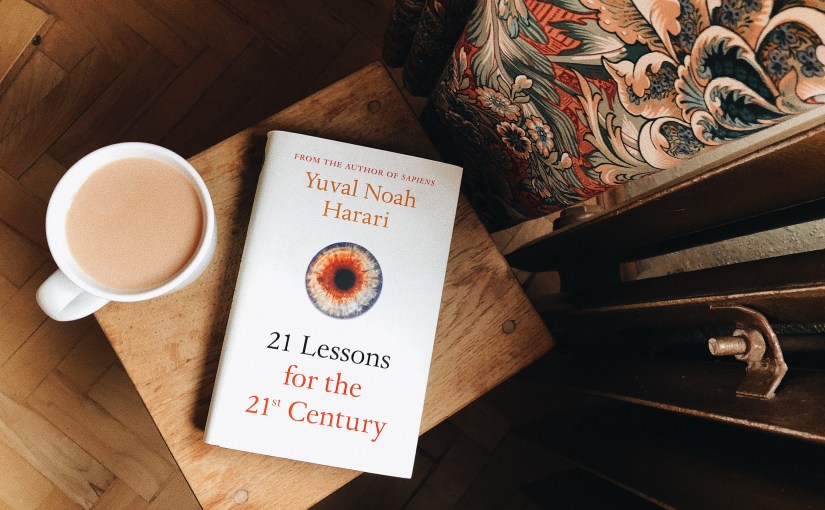
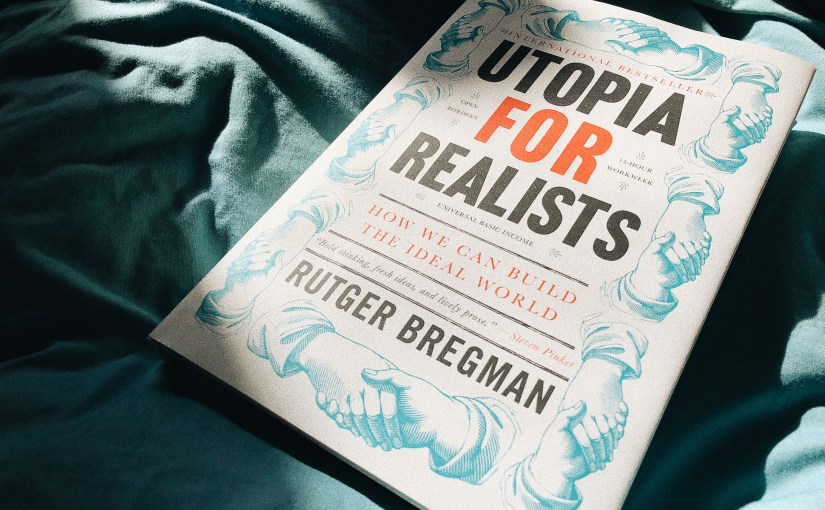


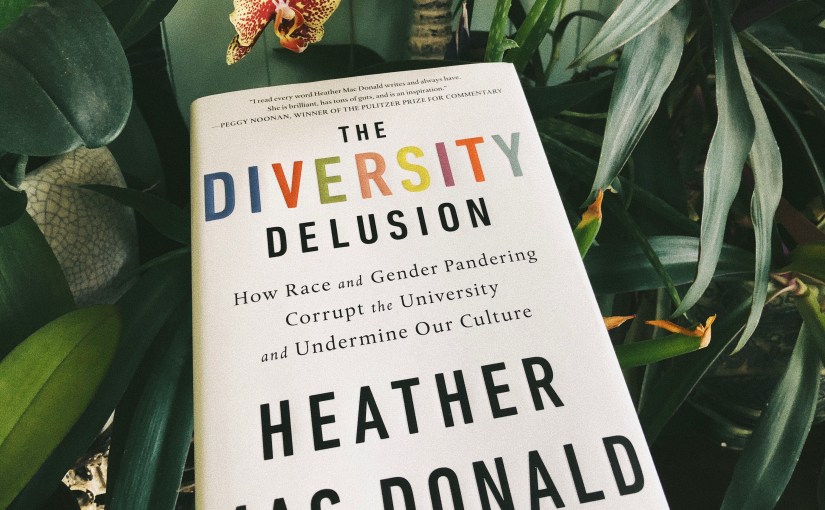
 Desperate Measures
You must be logged in to post a comment.